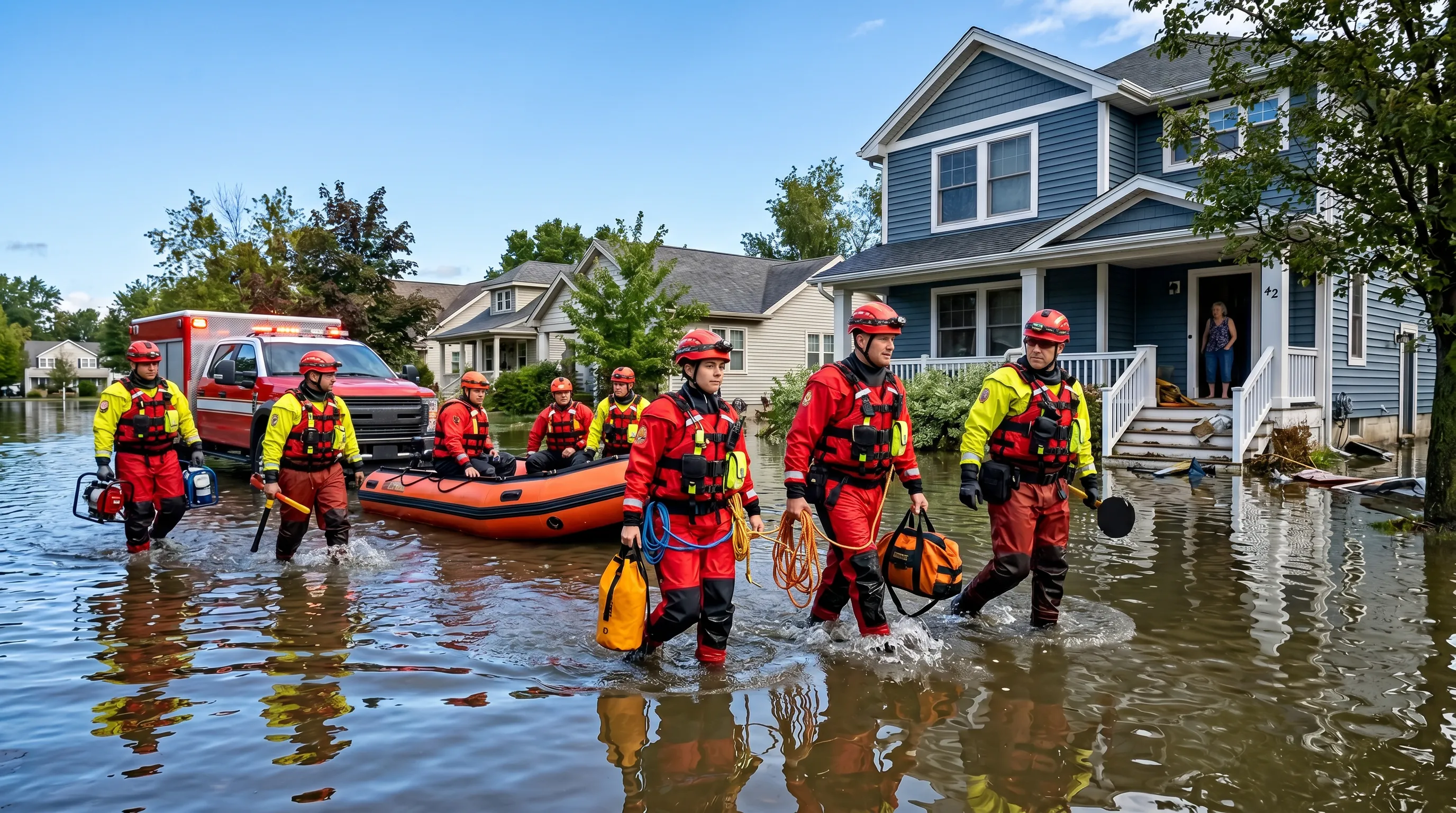
Water Damage Restoration professionals serving Chicago, IL
Key Takeaways
•Chicago has 19 listed water damage restoration professionals with an average rating of 4.9 out of 5 stars — one of the strongest local markets in the Midwest for restoration quality.
•The top-rated company, SERVPRO of Downtown Chicago/Team Zubricki, holds a perfect 5.0 rating across 110 reviews, but four other companies also hold perfect 5.0 ratings, giving Chicago homeowners genuine choices at the highest quality tier.
•Typical restoration costs in Chicago range from $1,200 to $5,600, with winter pipe freeze claims and basement flooding from Lake Michigan weather events driving the higher end of that range.
•Chicago's brutal winters — with temperatures routinely dropping below 0°F and wind chills far lower — make pipe freeze emergencies the single most common water damage event, meaning you should identify a restoration provider before January, not after a pipe bursts.
•All 19 listed businesses offer direct phone contact, and the industry standard for emergency response in Chicago is 60 minutes or less — if a company cannot commit to that, keep calling.
Water Damage Restoration in Chicago: What You Need to Know
Chicago is a city built on architecture and finance, and the structures that define its skyline — from century-old three-flat brownstones in Logan Square to glass-and-steel high-rises in the Loop — each carry unique water damage vulnerabilities. With a population of 2.7 million spread across 77 distinct neighborhoods, the city's housing stock ranges from pre-war construction with aging galvanized pipes to modern condominiums with complex HVAC drainage systems. Water damage does not discriminate by building type or zip code, but it does follow patterns that every Chicago property owner should understand. The 19 listed restoration professionals in this market collectively serve one of the most demanding urban environments in the country, averaging a 4.9-star rating that reflects both the competitive market and the high expectations of Chicago property owners who have learned — often the hard way — what separates a thorough remediation from a superficial one.
The primary water damage risks in Chicago are directly tied to its extreme climate. Cold winters and high winds are not merely inconveniences — they are infrastructure threats. When temperatures drop sharply and stay there for days, water supply lines in exterior walls, uninsulated crawl spaces, and poorly heated older buildings freeze and burst. A single burst pipe can release hundreds of gallons before it is discovered, saturating subfloor assemblies, drywall cavities, and the insulation between floors in multi-unit buildings. Hot summers bring their own problems: heavy rainfall combined with Chicago's aging combined sewer system regularly causes basement backups, particularly in neighborhoods like Bridgeport, Beverly, and parts of the Northwest Side where the infrastructure has not kept pace with development density. Understanding these patterns helps you evaluate whether a restoration company genuinely knows the Chicago market or is simply a regional franchise operator working from a generic playbook.
What makes the Chicago restoration market particularly strong is the depth of competition among top-tier providers. With five companies holding perfect 5.0 ratings and the overall field averaging 4.9 stars across 19 listed businesses, the quality floor is high. That said, high ratings alone do not tell the complete story. Review volume matters — a 5.0 rating on 10 reviews is statistically fragile, while Excel Fire And Water Damage Restoration Services maintains a perfect 5.0 across 696 reviews, which is a genuinely robust signal of consistent performance. When evaluating providers, treat rating and review volume together as a combined data point, not separately.
Chicago Local Tip: The city's building code requires permits for significant structural repairs following water damage in many cases. A restoration contractor who skips this step may be cutting corners that could affect your homeowner's insurance claim or create liability issues if you sell the property. Always ask your restoration company whether the scope of work requires a Chicago building permit — a reputable provider will know the answer immediately and handle the filing on your behalf.
How Much Does Water Damage Restoration Cost in Chicago?
Water damage restoration in Chicago typically runs between $1,200 and $5,600 for residential properties, but that range reflects enormous variation in scope, source, and severity. The lower end of that range generally covers a contained event — a single appliance leak discovered quickly, affecting one room with minimal structural penetration. The upper end reflects multi-room flooding, sewer backups (which involve contaminated Category 3 water requiring hazmat-level protocols), or damage that has been sitting long enough to trigger secondary mold growth. In Chicago specifically, a few cost factors push claims toward the higher end of the national average: the city's older housing stock means more plaster walls and original hardwood floors that require specialized drying approaches; multi-unit buildings complicate remediation because moisture can migrate between units, turning a single-unit claim into a building-wide assessment; and winter pipe freezes often occur in areas that were never designed for easy access, meaning more demolition and reconstruction labor.
Insurance reimbursement is a critical variable in the total cost equation. Most standard homeowner's policies in Illinois cover sudden and accidental water damage — a burst pipe qualifies, a slow leak you ignored for six months does not. Chicago homeowners in flood-prone neighborhoods should also check whether they carry separate NFIP (National Flood Insurance Program) coverage, since standard policies exclude ground-level flooding. Your restoration company's ability to document damage thoroughly and communicate with your adjuster directly can materially affect your out-of-pocket costs. The best Chicago restoration providers have dedicated insurance liaison staff for exactly this reason.
Service
Low Estimate
High Estimate
Notes
Water Extraction & Emergency Dry-Out (Single Room)
Low$1,200
High$2,000
Typical for contained appliance leaks or small pipe bursts in Chicago apartments and condos; cost rises if hardwood floors require specialized drying mats
Multi-Room Flooding & Structural Drying
Low$2,500
High$4,500
Common for Chicago basement flooding events and burst pipes affecting open-plan spaces; older construction with plaster walls increases drying time and labor
Sewage Backup Cleanup & Remediation
Low$3,000
High$5,600
Chicago's aging combined sewer system makes this a frequent claim; Category 3 contaminated water requires full PPE protocols, antimicrobial treatment, and material disposal
Mold Remediation Following Water Damage
Low$1,500
High$4,000
Secondary cost when water damage goes undetected — common in Chicago three-flats and coach houses where basement moisture accumulates over winter months
Money-Saving Tip for Chicago Homeowners: Before the restoration company arrives, document everything with timestamped photos and video — every affected room, every damaged item, every visible water source. Chicago adjusters process high claim volumes during winter pipe freeze season (December through February) and spring storm season (April through June). Thorough pre-remediation documentation is your strongest tool for maximizing your insurance payout and avoiding disputes over what was present before work began. Also ask your restoration provider whether they offer a written scope of work before they start — this protects you from scope creep billing.
How to Choose the Right Water Damage Restoration in Chicago
5 Questions to Ask Before Hiring
Are your technicians IICRC-certified, and can you show documentation? The right answer is yes — the Institute of Inspection, Cleaning and Restoration Certification is the industry standard credential, and any reputable Chicago company should have certified technicians on staff, not just a certificate hanging at the corporate office. Ask specifically which technicians will be on your job.
What is your guaranteed response time for emergency calls in Chicago, and do you serve my specific neighborhood? The right answer is 60 minutes or less, and they should be able to confirm coverage for your zip code without hesitation. Response times can vary significantly between the Loop and Far Northwest Side neighborhoods — a company headquartered in the suburbs may overstate their Chicago reach.
Do you handle insurance claims directly, including communication with my adjuster? The right answer is yes, with a dedicated staff member or process for insurance coordination. Chicago restoration jobs that involve structural damage or mold remediation frequently require adjuster walkthroughs and supplemental claim submissions — companies that leave this entirely to the homeowner are doing you a disservice.
What equipment will you use to monitor moisture levels during the drying process, and how will you report those readings to me? The right answer includes specific reference to moisture meters, thermal imaging cameras, and psychrometric data logging — not just 'we bring fans and dehumidifiers.' Chicago's humid summers and cold winters create complex drying conditions, and a company that cannot explain how they verify dryness is a company guessing.
What is your policy if mold is discovered during remediation, and are you licensed to handle it in Illinois? The right answer is a clear protocol that includes stopping work, notifying you immediately, and providing a written mold remediation plan. Illinois does not require a separate mold remediation license, but Chicago companies handling significant mold should follow IICRC S520 standards — ask if they do.
Red Flags When Hiring Water Damage Restoration in Chicago
Red Flags to Watch For in the Chicago Market:
Storm chasers and out-of-state contractors: After major Chicago weather events — particularly the ice storms and polar vortex events that strike every few years — out-of-region contractors flood the market. If a company cannot give you a local Chicago address, a local phone number that connects to actual staff, and references from Chicago-area clients, be extremely cautious.
Pressure to sign immediately and waive your right to a written estimate: Legitimate Chicago restoration companies understand that homeowners need time to review scope of work and, in many cases, coordinate with their insurance carrier. Any company demanding an immediate signature before providing written documentation of what work will be done and at what cost is a serious red flag.
No direct phone contact or reliance solely on web forms for emergencies: All 19 listed Chicago restoration professionals offer direct phone contact — this is the baseline expectation in this market. A company that routes emergency calls through a national call center with no local staff available is not equipped to meet Chicago's 60-minute response standard.
Unusually low bids without explanation: A bid significantly below the $1,200–$5,600 typical range for Chicago restoration work may reflect cut corners on drying time, skipped moisture listing, or the use of uncertified labor. Water damage that is not fully dried and remediated almost always leads to mold — a far more expensive problem months later.
Inability to explain their drying protocol in specific terms: Any IICRC-certified Chicago technician should be able to tell you the target moisture content for your specific building materials, how many days of drying they project, and what happens if readings are not where they need to be. Vague answers like 'we'll dry it until it's dry' are not acceptable professional standards.
Top-Rated Water Damage Restoration in Chicago
Chicago's water damage restoration market is led by five companies that have each earned a perfect 5.0-star rating, though they differ meaningfully in review volume, specialization, and service profile — all of which matter when choosing the right fit for your specific situation.
SERVPRO of Downtown Chicago/Team Zubricki holds the top position in this guide with a 5.0 rating across 110 reviews. As the downtown-focused franchise within the SERVPRO national network, Team Zubricki brings the brand's standardized IICRC protocols combined with specific expertise in high-rise and mixed-use commercial buildings — a critical advantage given that a significant portion of Chicago's Loop and Near North Side property stock consists of exactly these building types. For condominium associations, property managers, and business owners in Chicago's core, this is a particularly relevant provider.
Excel Fire And Water Damage Restoration Services stands out on review volume alone — a perfect 5.0 rating sustained across 696 reviews is exceptional by any standard and represents a level of statistical confidence that smaller review counts simply cannot match. This volume suggests a high-throughput operation with consistently trained technicians and repeatable quality processes, which matters in a city where restoration needs can spike sharply during winter freeze events and spring flooding seasons.
Romexterra Construction Fire and Water Restoration Services of Chicago brings a 5.0 rating across 252 reviews and — notably — carries construction capability alongside restoration. This is a meaningful differentiator in Chicago, where water damage to older buildings frequently requires not just remediation but structural repair work. A single-vendor solution that handles both phases can significantly reduce project timelines and eliminate the coordination friction that occurs when a restoration company hands off to a separate general contractor.
ServiceMaster Restoration By Simons carries a 5.0 rating across 89 reviews and operates within the ServiceMaster national franchise network, bringing standardized protocols and insurance industry relationships that can streamline the claims process for Chicago homeowners navigating complex losses.
Moldman Chicago rounds out the top five with a 5.0 rating across 220 reviews. The company name reflects a specialization that is directly relevant to Chicago's climate: mold remediation following water intrusion is one of the most common secondary damage scenarios in the city, particularly in the older building stock where moisture has multiple pathways into wall and floor assemblies. For Chicago property owners dealing with suspected mold growth alongside active water damage, Moldman's depth in this specific area is worth noting.
Company
Rating
Reviews
Best For
SERVPRO of Downtown Chicago/Team Zubricki
5.0★
110
High-rise buildings, Loop and Near North Side commercial properties, condominium associations needing a nationally-backed provider with downtown Chicago expertise
Excel Fire And Water Damage Restoration Services
5.0★
696
Homeowners and property managers who prioritize proven consistency at scale — highest review volume of any top-rated Chicago provider signals reliable, repeatable results
Romexterra Construction Fire and Water Restoration Services of Chicago
5.0★
252
Properties requiring both remediation and structural reconstruction — eliminates handoff friction in Chicago's older housing stock where water damage frequently causes structural damage
ServiceMaster Restoration By Simons
5.0★
89
Chicago homeowners who want a nationally-affiliated provider with strong insurance carrier relationships and standardized claims documentation processes
Moldman Chicago
5.0★
220
Water damage cases with confirmed or suspected mold growth — particularly relevant for Chicago's pre-war building stock and basement flooding scenarios where secondary mold is a near-certain outcome without proper remediation
Seasonal Guide to Water Damage Risks in Chicago
Chicago's water damage risk profile is fundamentally shaped by its climate extremes, and understanding the seasonal pattern is the most practical thing a property owner can do to protect their investment. The city's cold winters and hot summers create four distinct risk windows across the year, each requiring different preparation and response strategies.
Winter (December through February) is Chicago's highest-risk season for water damage, and it is almost entirely driven by pipe freezes. When temperatures drop below 20°F — which happens multiple times every winter, and during polar vortex events can drop to -20°F with wind chills below -40°F — water supply lines in exterior walls, attics, crawl spaces, and unheated utility areas are at serious risk of freezing and bursting. The damage from a burst pipe is compounded in winter because the freeze event that caused the pipe to burst can also make emergency response slower and more difficult. Restoration equipment must be brought into environments where setting up drying systems while managing cold air infiltration is technically complex. Chicago homeowners in older buildings with original plumbing should know where their main water shutoff is located before winter arrives, not after. Restoration companies active in Chicago during this period are often operating at capacity — identifying your provider in November rather than January is a genuine advantage.
Spring (March through May) brings snowmelt and the city's heaviest sustained rainfall, which together stress Chicago's combined sewer system to its limits. Basement flooding through floor drains and sewer backups are the dominant claims during this window. Chicago's flat topography means that when the sewer system surcharges, there is nowhere for water to go except up through the lowest point of a building — which is almost always the basement floor drain. Properties in low-lying areas of the Northwest Side, the Southwest Side near the Chicago River's South Branch, and sections of the South Side near the Calumet waterway are disproportionately affected. A backwater valve is the single most effective preventive measure for Chicago homeowners in these areas, and any restoration company worth their rate should be able to discuss this during or after a remediation job.
Summer (June through August) brings Chicago's hottest temperatures alongside severe convective storms — the kind that drop two inches of rain in an hour rather than two inches over a day. These flash flooding events overwhelm storm drains, cause window well flooding in below-grade units, and create roof leak scenarios as wind-driven rain finds gaps in aging Chicago flat roofs and parapet walls. The city's architecture, dominated by flat and low-slope roofing on residential and commercial buildings alike, makes roof-related water intrusion a persistent summer issue. Chicago's hot summers also mean that post-flood drying must account for high ambient humidity — restoration equipment sizing matters more in August than it does in March, and a company that does not adjust their drying system deployment for seasonal conditions may underperform.
Fall (September through November) is Chicago's transition season and the ideal time for preventive action. This is when property owners should be insulating exposed pipes, testing sump pump operation before ground freezes make access difficult, clearing gutters and downspouts before late-fall leaf fall compounds drainage problems, and — critically — identifying a water damage restoration provider before winter demand peaks. The restoration companies serving Chicago are not a commodity market where capacity is unlimited. During major winter events, the best providers book up quickly. Establishing a relationship in October is simply smarter than competing for response slots in January.
Frequently Asked Questions
How quickly should a water damage restoration company respond in Chicago?
The industry standard in Chicago is 60 minutes or less for emergency response. This is not a marketing promise — it is a functional requirement rooted in water damage science. Water begins wicking into drywall, insulation, and wood framing within the first hour after a flooding event. Within 24 to 48 hours, conditions favorable to mold growth are established in Chicago's climate. Every hour of delayed response meaningfully increases both the scope of damage and the total remediation cost. All 19 listed Chicago restoration professionals offer direct phone contact for exactly this reason. If a company cannot commit to a 60-minute response window for your location — particularly if you are in an outlying Chicago neighborhood rather than the core — ask why and evaluate their answer carefully.
Does homeowner's insurance cover water damage from burst pipes in Chicago?
In most cases, yes — a standard homeowner's insurance policy in Illinois covers sudden and accidental water damage, and a burst pipe caused by Chicago's winter cold qualifies as sudden and accidental. However, there are important exceptions. Damage resulting from long-term neglect — a slow pipe leak you were aware of and did not fix, for example — is typically excluded as a maintenance issue. Ground-level flooding from an external source, including the Chicago River or Lake Michigan, is excluded from standard policies and requires separate National Flood Insurance Program (NFIP) coverage or a private flood endorsement. Sewer backup coverage is also commonly excluded unless you have added a specific rider. Before your restoration company begins work, notify your insurance carrier and get a claim number — the best Chicago restoration providers will work directly with your adjuster throughout the process.
Find Water Damage Restoration Professionals in Chicago
Browse top-rated contractors, compare reviews, and get free quotes.
What does IICRC certification mean, and why does it matter for Chicago restoration work?
The IICRC — Institute of Inspection, Cleaning and Restoration Certification — is the primary professional credentialing body for the restoration industry in North America. IICRC certification requires technicians to complete standardized coursework in water damage science, drying theory, contamination categories, and equipment operation, and to pass written examinations demonstrating competency. For Chicago property owners, IICRC certification matters because it establishes a baseline of technical knowledge that directly affects restoration outcomes. An IICRC-certified technician knows, for example, that Chicago's older balloon-frame construction requires different cavity drying approaches than modern platform-frame buildings, and that a Category 3 sewage backup in a Chicago basement requires a fundamentally different protocol than a clean water supply line leak. Certification does not guarantee excellence, but its absence is a meaningful risk factor.
How long does water damage restoration typically take in a Chicago home?
The timeline depends heavily on the source, category, and extent of the water damage. For a contained clean-water event — a burst supply line affecting one room in a Chicago apartment — the extraction and drying process typically takes three to five days, followed by whatever reconstruction is needed. For a Category 3 sewage backup affecting a Chicago basement, the initial remediation and drying phase can run five to seven days, with reconstruction extending the total project to two to four weeks depending on the scope of material removal and replacement. Chicago-specific factors that extend timelines include older plaster construction (which holds moisture longer than modern drywall), multi-unit buildings where moisture has migrated between floors, and winter conditions where cold air infiltration makes maintaining optimal drying temperatures more energy-intensive. Ask your restoration provider for a day-by-day drying schedule with specific moisture content targets — that is how a professional operation manages a Chicago remediation job.
What is the difference between water damage restoration and water damage repair, and do Chicago companies do both?
Water damage restoration refers to the emergency mitigation and remediation phase: water extraction, structural drying, antimicrobial treatment, and returning the building to a dry, stable condition. Water damage repair — sometimes called reconstruction — refers to replacing materials that were damaged beyond drying: drywall, flooring, insulation, cabinetry, and similar items. Some Chicago restoration companies, like Romexterra Construction Fire and Water Restoration Services of Chicago, handle both phases under one roof. Others focus on restoration only and will refer you to a general contractor for reconstruction. Both models are legitimate, but the single-vendor approach has a practical advantage in Chicago: restoration and reconstruction often overlap in timeline, and having one company accountable for both phases eliminates the finger-pointing that can occur when a separate contractor discovers the remediation was incomplete. Ask any Chicago provider you are considering whether they handle full reconstruction or restoration only, and factor that into your decision based on the scope of your specific damage.