Water Damage Restoration professionals serving Columbus, OH
Key Takeaways
•Columbus has 20 listed water damage restoration professionals with an exceptional average rating of 4.9 out of 5 stars, giving homeowners a strong pool of quality options.
•Five companies in Columbus hold a perfect 5.0-star rating, including Rainbow Restoration of Westerville (152 reviews) and Best Option Restoration of West Columbus (101 reviews) — both with substantial review counts that make their scores statistically credible.
•Water damage restoration in Columbus typically costs between $1,200 and $5,600, with scope and water category being the biggest cost drivers — Columbus's aging housing stock in areas like Clintonville and the Short North can push costs toward the higher end.
•Columbus's humid continental climate creates year-round risk: frozen pipe bursts in January and February, spring basement flooding from snowmelt and rain, and summer storm surges from severe thunderstorm season all keep demand for restoration services elevated.
•95% of listed Columbus restoration businesses provide direct phone contact, which matters critically in a water emergency — the industry standard response expectation is 60 minutes or less, and a company you can reach immediately is non-negotiable.
Water Damage Restoration in Columbus: What You Need to Know
Columbus is Ohio's largest city with a population approaching 900,000, and its combination of a humid continental climate, aging residential neighborhoods, and a geography that funnels weather systems across central Ohio makes water damage one of the most common and costly home emergencies residents face. The city sits at the confluence of the Olentangy and Scioto rivers, which means neighborhoods like Franklinton, Grandview Heights, and areas near Griggs Reservoir can face localized flooding during heavy rain events — events that are becoming more intense and more frequent. Across broader Columbus, whether you are in a mid-century ranch home in Whitehall or a newer build in Dublin or Powell, the risks are real and the response time window is short. Water that is allowed to sit for more than 24 to 48 hours begins generating secondary damage in the form of mold growth, structural degradation, and compromised insulation — all of which dramatically increase restoration costs.
The good news for Columbus homeowners is that the local restoration market is mature and competitive. With 20 listed professionals and an average rating of 4.9 stars, the market has clearly rewarded quality operators. Columbus's prominence as a hub for insurance industry employment — companies like Nationwide, Grange Insurance, and Huntington Bancshares have major presences here — means a large share of residents are insurance-sophisticated and accustomed to navigating claims processes. Many Columbus restoration companies have built strong working relationships with local insurance adjusters, which can streamline the claims process for homeowners considerably. When evaluating restoration providers, ask specifically about their experience working with Ohio-based carriers and their ability to document losses in formats that insurers accept. IICRC certification is the credential that matters most: it signals that technicians have been trained in industry-standard protocols for water extraction, structural drying, and microbial remediation — and it is the benchmark Columbus residents should require before signing any contract.
Columbus Local Tip: Because Columbus is home to several major insurance carriers and a large population of insurance industry professionals, many local restoration companies are well-practiced at working directly with insurance adjusters and submitting Xactimate-format estimates. When you call a restoration company after a loss, ask specifically: 'Do you work directly with insurance adjusters and submit Xactimate estimates?' A yes answer can save you weeks of back-and-forth and out-of-pocket delays during the claims process.
How Much Does Water Damage Restoration Cost in Columbus?
Water damage restoration in Columbus generally runs between $1,200 and $5,600, but that range conceals significant variation based on four key factors: the category of water involved, the total square footage affected, the materials impacted, and how quickly mitigation begins. Columbus's housing stock skews older in its most densely populated neighborhoods — much of Clintonville, Bexley, Westerville, and the Near East Side features homes built between the 1920s and 1960s with plaster walls, older plumbing, and unfinished basements that absorb water differently than modern construction. Plaster, for example, requires different drying protocols than drywall and can drive labor costs upward. Similarly, finished basements — common in Columbus's suburban ring from Hilliard to Pickerington — substantially increase restoration scope when they flood.
Insurance coverage is another cost variable that Columbus homeowners frequently misunderstand. Standard homeowners policies in Ohio typically cover sudden and accidental water damage — like a burst pipe — but exclude flood damage caused by rising external water. Given the Scioto and Olentangy river systems and Columbus's storm sewer infrastructure, homeowners in lower-lying neighborhoods should seriously evaluate whether they need a separate NFIP or private flood insurance policy. Always get a written, itemized estimate before authorizing work, and make sure it specifies the scope of extraction, drying equipment deployment, structural drying duration, and any demolition required. Vague estimates are a red flag in any market, but particularly in Columbus where project complexity can escalate quickly in older homes.
Service
Low Estimate
High Estimate
Notes
Emergency Water Extraction (single room)
Low$300
High$800
Standing water removal from a single bathroom, laundry room, or bedroom. Costs rise in Columbus's older homes with concrete block foundations that retain moisture.
Basement Flooding Restoration
Low$1,200
High$3,500
Very common in Columbus given the clay-heavy soil and aging sump systems in neighborhoods like Worthington and Upper Arlington. Finished basements push costs significantly higher.
Burst Pipe or Appliance Leak Restoration
Low$1,500
High$4,200
Includes extraction, drying, and drywall repair. Columbus's freeze-thaw cycles in January–February make pipe bursts a peak-season event with potential for higher demand pricing.
Sewage Backup Remediation
Low$2,000
High$5,600
Category 3 (black water) requires full PPE protocols, antimicrobial treatment, and often full material removal. Columbus's combined sewer overflow system in older areas creates recurring risk after heavy rain events.
Money-Saving Tip for Columbus Homeowners: Columbus's combined sewer system — which serves much of the older city core — means sewage backups after heavy storms can be partially attributed to municipal infrastructure failure. If your backup was caused by a public sewer surcharge, contact the City of Columbus Division of Sewerage and Drainage before paying out of pocket. The city has an established process for evaluating liability claims that can offset your restoration costs. Additionally, get at least two written estimates from IICRC-rated Columbus companies before authorizing non-emergency scope work — the competitive local market with 20 listed providers means pricing is negotiable, especially for remediation and rebuild phases.
How to Choose the Right Water Damage Restoration Company in Columbus
5 Questions to Ask Before Hiring a Columbus Water Damage Restoration Company
Are your technicians IICRC-certified, and can you provide proof? The right answer is an immediate yes with documentation. IICRC certification — specifically the Water Damage Restoration Technician (WRT) credential — means your technician has been trained to industry standards. In Columbus's competitive market with 20 listed providers, IICRC certification should be a baseline, not a differentiator. Any hesitation or vague response about 'in-house training only' should disqualify a company.
What is your guaranteed response time, and do you operate 24/7/365 in Columbus? The right answer is a specific commitment of 60 minutes or less with true 24-hour emergency availability every day of the year. Columbus experiences weather events, pipe failures, and appliance malfunctions at all hours. A company that only dispatches during business hours is inadequate for emergency restoration. Confirm they have Columbus-area technicians on call — not a call center that routes to a distant contractor.
Will you work directly with my insurance carrier, and do you submit Xactimate estimates? The right answer is yes on both counts. Given Columbus's high concentration of insurance industry workers and the major carriers headquartered here, the best local companies are fluent in insurance documentation. A company that cannot or will not interface with your carrier shifts a significant administrative burden onto you at the worst possible time.
Can you provide references from Columbus-area jobs completed in the past 90 days, and are your online reviews recent? The right answer is yes, with references willing to speak with you. Reviews from 2019 or 2020 tell you little about a company's current staffing, equipment, and quality. With companies like Rainbow Restoration of Westerville holding 152 reviews and Best Option Restoration of West Columbus holding 101 reviews, Columbus has operators with deep, recent review histories — use those as your benchmark for what credible volume looks like.
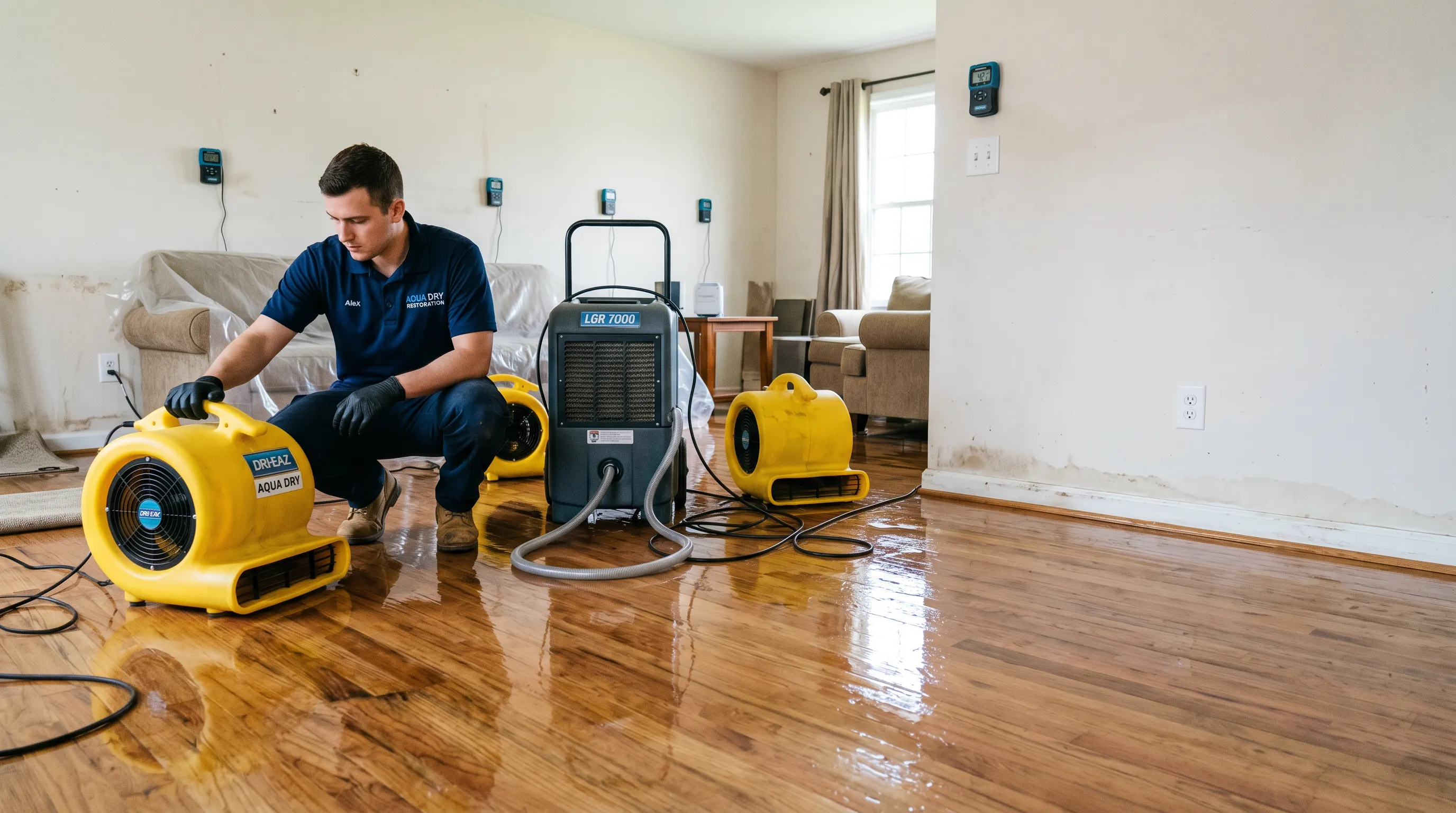
What does your drying monitoring protocol look like, and how will you document progress? The right answer involves specific mention of moisture meters, thermal imaging cameras, and daily or twice-daily moisture readings logged in writing. The IICRC S500 standard requires documented drying goals and progress. Companies that simply place fans and check back in three days are not following best practices. In Columbus's humid continental climate, ambient humidity conditions vary significantly by season and affect drying timelines — a professional will account for this in their equipment deployment.
Red Flags When Hiring Water Damage Restoration in Columbus
Watch for These Red Flags When Hiring a Columbus Water Damage Restoration Company:
Door-to-door solicitation after a storm event: Storm chasers and unlicensed contractors frequently canvass Columbus neighborhoods — particularly in areas like Hilliard, Reynoldsburg, and Gahanna — after significant weather events. Legitimate Columbus restoration companies do not cold-knock doors hours after a storm. If someone shows up unsolicited urging you to sign immediately 'before your insurance coverage expires,' walk away.
No physical Columbus-area address or local technicians: Some companies operating in Columbus are essentially call centers that broker work to subcontractors from outside the area. Ask specifically: 'Where are your technicians based?' A company without a genuine Columbus-area operational presence may struggle to meet the 60-minute response standard.
Pressure to sign an Assignment of Benefits (AOB) agreement immediately: While AOB agreements are not inherently fraudulent, being pressured to sign one before receiving any estimate or scope of work is a red flag. Understand what you are signing before transferring insurance claim rights to any restoration company.
No written, itemized estimate before work begins: Verbal quotes and vague 'we will bill insurance directly' statements without documentation are unacceptable. Require a written estimate that specifies equipment, labor, square footage, and expected project duration before authorizing any scope of work beyond emergency extraction.
Cannot produce proof of IICRC certification or insurance: Ohio does not require a specific state license for water damage restoration contractors, which makes IICRC certification and general liability insurance even more important as consumer protection benchmarks. Any company that cannot immediately produce proof of both should be disqualified, regardless of how polished their website or sales pitch appears.
Top-Rated Water Damage Restoration Companies in Columbus
Columbus's water damage restoration market rewards consistent quality — and the five companies holding a perfect 5.0-star rating reflect that. What separates meaningful 5.0 ratings from superficial ones is review volume, and Columbus's top companies have both. Rainbow Restoration of Westerville stands out with 152 reviews at 5.0 stars, making it the most statistically robust perfect score in the Columbus market. Located in Westerville — one of Columbus's fastest-growing suburbs with significant new residential construction — this company has clearly built deep trust across a large and diverse customer base. Best Option Restoration of West Columbus comes in with 101 reviews at 5.0 stars, serving the western Columbus market including areas like Hilliard, Grove City, and the westside neighborhoods where older ranch-style homes with basement water issues are particularly common.
1-800 Water Damage of Columbus Northeast brings a nationally recognized brand framework to the northeast Columbus market — covering areas like Gahanna, New Albany, and Westerville's eastern reaches — with 38 reviews at a perfect 5.0. The brand's systems-driven approach to documentation and customer communication tends to produce consistent outcomes, and the review count is meaningful. Columbus Fire and Water Restoration holds a 5.0 with 4 reviews — a strong early track record, though the lower volume means less certainty about consistency at scale. Arch City Water Damage Solutions rounds out the top five with 17 reviews at 5.0 stars, representing a newer or smaller operator that has built an impeccable early reputation. Across all 20 listed Columbus providers, the 4.9-star average is genuinely exceptional — well above national benchmarks for the trades category — and reflects a market where substandard operators have been filtered out by informed, review-savvy Columbus consumers.
Company
Rating
Reviews
Best For
Rainbow Restoration of Westerville
5.0★
152
Homeowners in Westerville and northeast Columbus suburbs seeking the highest statistically credible rating in the market — 152 reviews at 5.0 stars is the strongest combination of quality and volume among Columbus providers
Best Option Restoration of West Columbus
5.0★
101
Westside Columbus, Hilliard, and Grove City homeowners — particularly those dealing with basement flooding and older ranch-home plumbing failures common in west Columbus's mid-century housing stock
1-800 Water Damage of Columbus Northeast
5.0★
38
Gahanna, New Albany, and northeast Columbus corridor residents who value the consistency of a nationally structured brand with local technicians and strong documentation practices
Arch City Water Damage Solutions
5.0★
17
Homeowners seeking a locally rooted Columbus operator with an unblemished early track record — a strong option for those who prefer independently owned businesses over franchise operations
Columbus Fire and Water Restoration
5.0★
4
Customers seeking a specialist with fire and water combined expertise — particularly relevant for Columbus properties where water damage occurred as part of a fire suppression event
Seasonal Guide to Water Damage Risk in Columbus, OH
Columbus's humid continental climate generates distinct water damage risk patterns across all four seasons, and understanding them helps homeowners prepare rather than react. Winter — particularly January and February — is peak pipe burst season. Columbus regularly experiences multi-day cold snaps where temperatures drop into the single digits Fahrenheit, and the city's housing stock includes a significant number of older homes where pipes run through exterior walls, crawlspaces, or uninsulated garages. When temperatures plunge after a stretch of mild weather, unprepared plumbing is highly vulnerable. Pipe bursts are fast-moving emergencies where the 60-minute response standard is critical — within hours, water can migrate through multiple floors and wall cavities. During cold snaps, Columbus restoration companies often experience surge demand, so having your preferred provider's number saved before an emergency occurs is strongly advisable.
Spring — March through May — brings the second major risk window. Central Ohio's clay-heavy soils drain poorly, and Columbus typically receives significant rainfall in this period as winter snowpack melts and spring storm systems move through. Basement flooding from sump pump failures, window well overflow, and foundation seepage are the dominant claim types during spring. Homeowners in flood-adjacent areas near the Scioto and Olentangy rivers — Franklinton and parts of the Hilltop — face elevated risk from riverine flooding during exceptional rain events. Spring is also when Columbus's combined sewer system, which serves much of the older city core, is most likely to surcharge, pushing sewage back through floor drains in basements. This is Category 3 black water that requires full remediation protocols and is among the most expensive restoration scenarios.
Summer in Columbus is defined by severe thunderstorm season. The city sits in a region where warm, moist air masses from the Gulf of Mexico collide with cooler continental air, producing intense convective thunderstorms capable of generating several inches of rain in an hour. Flash flooding of basements, window wells, and low-lying yards is common. Roof damage from hail can allow water intrusion that goes undetected for days until ceiling materials fail. Columbus restoration companies typically see their busiest period between June and August, and response times can stretch during major regional storm events. After any significant storm, inspect your roof, gutters, and window wells within 24 hours. Fall — September through November — is generally the lowest-risk season for water damage in Columbus, though early freeze events in October can catch homeowners off guard before exterior hose bibs are winterized and before pipes in unconditioned spaces have been addressed. Use the fall shoulder season to schedule preventive plumbing inspections, test your sump pump, and clear gutters of leaf debris before November rains.
Frequently Asked Questions About Water Damage Restoration in Columbus
How quickly should a water damage restoration company arrive at my Columbus home?
The industry standard — and what Columbus's top-rated companies commit to — is 60 minutes or less for emergency response. This is not arbitrary: water migrates rapidly through building materials, and every hour of delay increases both the scope of damage and the total restoration cost. In Columbus, most top-rated providers maintain local technician crews in the metro area specifically to meet this window. When you call, ask for a specific estimated arrival time and confirm that the responding technician will arrive with extraction equipment — not just to 'assess' and then schedule a return visit. If a company cannot commit to a timeframe or hedges with 'it depends on our schedule,' call the next option on your list. With 20 listed providers in Columbus averaging 4.9 stars, you have strong alternatives.
Does my Columbus homeowners insurance cover water damage from basement flooding?
It depends entirely on the cause of the water intrusion, and this distinction matters enormously in Columbus. Standard Ohio homeowners insurance policies typically cover sudden and accidental water damage — a burst pipe, a washing machine supply line failure, or an HVAC condensate overflow — but they specifically exclude flood damage caused by surface water, storm surge, or overflowing bodies of water like the Scioto or Olentangy rivers. If your Franklinton or Hilliard basement floods because the river crested or because municipal storm sewers backed up, a standard policy likely will not pay the claim. Homeowners in lower-lying Columbus neighborhoods should seriously evaluate a separate National Flood Insurance Program (NFIP) policy or private flood insurance. Call your carrier immediately after any water event and document everything with photos and video before any restoration work begins — this documentation is critical for your claim.
Find Water Damage Restoration Professionals in Columbus
Browse top-rated contractors, compare reviews, and get free quotes.
What does IICRC certification mean and why does it matter for Columbus homeowners?
IICRC stands for the Institute of Inspection, Cleaning and Restoration Certification, and it is the primary professional credentialing body for the restoration industry in North America. For Columbus homeowners, IICRC certification — specifically the Water Damage Restoration Technician (WRT) credential — means that the technician working in your home has been trained and tested on the IICRC S500 Standard for Professional Water Damage Restoration. This standard governs how water is categorized (clean, gray, or black), how drying goals are set, how equipment is selected and deployed, and how progress is documented. Ohio does not have a specific state license requirement for water restoration contractors, which makes IICRC certification the most important third-party benchmark available to Columbus consumers. Always ask to see the technician's IICRC card — legitimate certification is individual and verifiable on the IICRC website.
How long does water damage restoration typically take in Columbus homes?
The structural drying phase — the core of any water damage restoration project — typically takes three to five days for a standard residential loss when addressed promptly, but this timeline is highly variable based on several factors that are particularly relevant in Columbus. The city's older housing stock often includes plaster walls, original hardwood floors, and balloon-frame construction, all of which dry more slowly than modern materials. Columbus's seasonal humidity levels also affect drying times: summer ambient humidity can slow evaporation and require dehumidifier capacity adjustments, while winter's dry indoor air can accelerate structural drying. A professionally run Columbus restoration job will include daily moisture readings with calibrated meters, and the project should not be declared dry until readings meet IICRC drying goals — not on a predetermined calendar schedule. After drying is complete, reconstruction (drywall replacement, flooring, painting) is a separate phase that can add one to four weeks depending on scope.
Should I try to clean up water damage myself before calling a Columbus restoration company?
Limited first-response actions are appropriate and can reduce damage — removing standing water with a wet-dry vacuum, elevating furniture off wet carpet, and using fans to begin air movement. However, Columbus homeowners should call a professional immediately and in parallel, not instead of, self-help efforts. There are several reasons professional response is essential even for losses that appear minor at first. First, water migrates invisibly: what looks like a small kitchen leak may have traveled inside wall cavities, under flooring, and into subfloor materials you cannot see or feel. Moisture meters and thermal imaging cameras reveal the true extent of moisture migration. Second, Category 2 and Category 3 water — from dishwasher overflows, toilet backups, or sewer events — contains bacteria and pathogens that require proper handling and antimicrobial treatment, not just drying. Third, if you intend to file an insurance claim, having a professional restoration company document the loss from the beginning creates the evidentiary record your insurer requires. Self-remediation without professional documentation can complicate or invalidate claims.
Best Water Damage Restoration in Columbus, OH — Complete 2026 Guide | Water Damage Restoration