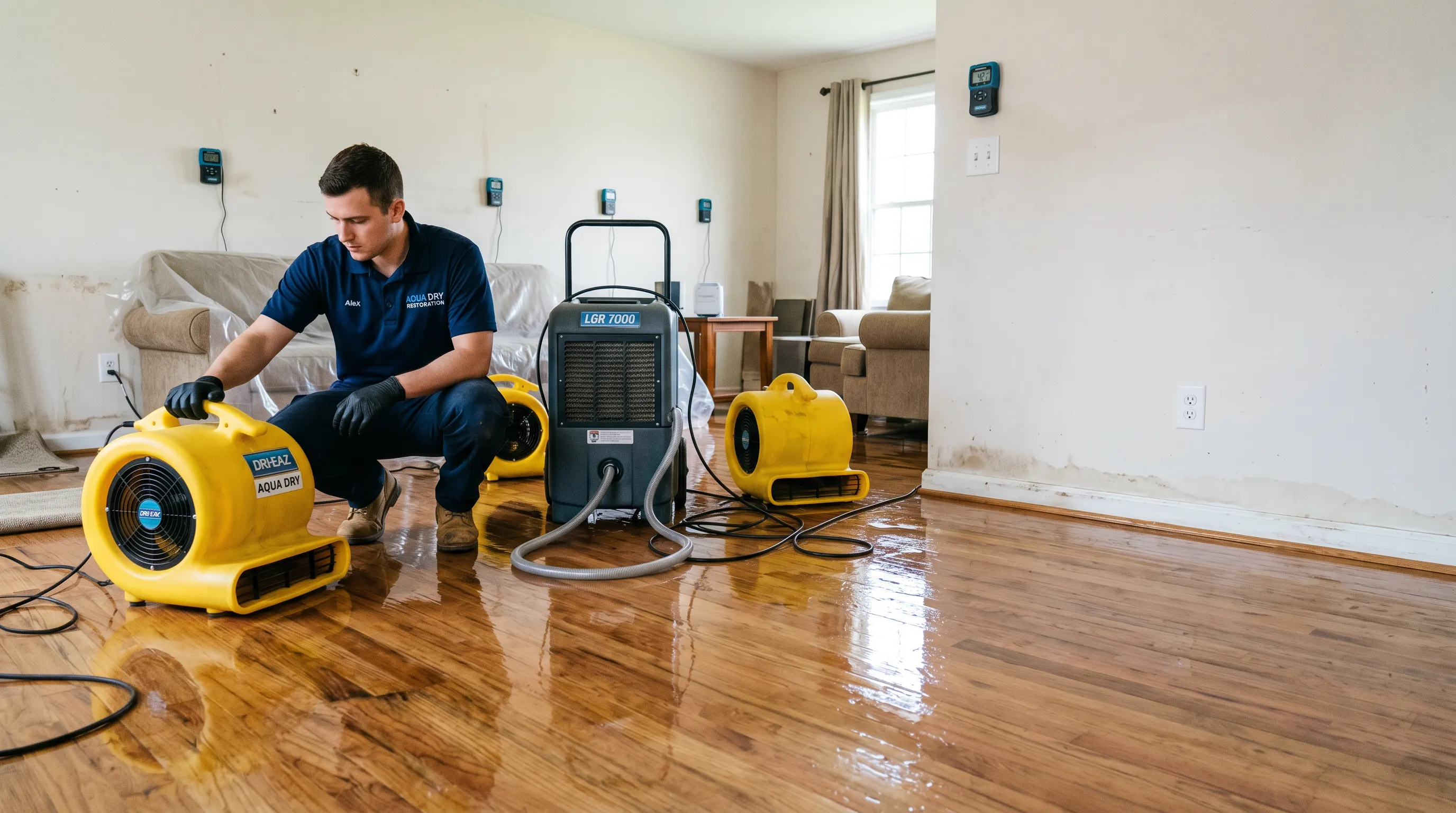
Water Damage Restoration professionals serving Fort Worth, TX
Key Takeaways
•Fort Worth has 19 listed water damage restoration professionals, with an exceptionally high average rating of 4.9 out of 5 stars — indicating a competitive, high-quality local market.
•MVP Restorations leads the field with a perfect 5.0-star rating across 431 reviews, making it the most reviewed and top-rated provider in the Fort Worth area.
•Water damage restoration in Fort Worth typically costs between $1,200 and $5,600, depending on the class of damage, affected square footage, and whether mold remediation is required.
•Fort Worth's climate creates year-round water damage risk — severe spring thunderstorms, occasional winter pipe freezes during North Texas cold snaps, and intense summer heat that can stress plumbing systems.
•All 19 listed businesses offer direct phone contact, meaning you can reach a live professional quickly — critical since water damage worsens every hour it goes untreated.
Water Damage Restoration in Fort Worth: What You Need to Know
Fort Worth sits in the heart of North Texas, a region where weather volatility is a fact of life. The city experiences dramatic spring storm seasons, periodic winter freezes that can rupture pipes in homes not built to withstand sustained sub-freezing temperatures, and intense summer heat that accelerates mold growth after any water intrusion event. For property owners in Fort Worth, water damage is not a matter of if — it is a matter of when. The good news is that the local restoration industry has risen to meet that demand. With 19 listed water damage restoration professionals and an average rating of 4.9 out of 5 stars, Fort Worth residents have access to a deep bench of highly capable contractors who specialize in everything from emergency extraction to full structural drying and mold remediation.
What makes Fort Worth's restoration market particularly notable is the concentration of five-star providers. Companies like MVP Restorations, All Dry Services of Fort Worth, SERVPRO of Lake Arlington, Water Damage Restoration Euless, and Fort Worth Water have all achieved perfect 5.0-star ratings, though they vary considerably in review volume — which is an important distinction when evaluating credibility. MVP Restorations, for instance, carries that perfect rating across 431 individual reviews, giving it a statistical weight that a newer company with six reviews simply cannot match yet. That said, newer entrants like Fort Worth Water are worth monitoring as they build their track record in this growing community.
When water damage strikes — whether from a burst pipe under a slab foundation, roof leak during a severe hailstorm, appliance failure, or flooding from one of Fort Worth's many low-lying neighborhoods near the Trinity River — the clock starts immediately. Water begins migrating into wall cavities, subfloor materials, and insulation within minutes. Drywall can begin to deteriorate within hours, and mold colonization can begin in as little as 24 to 48 hours under Fort Worth's warm, humid conditions. Choosing the right restoration professional is not simply a matter of cost — it is about finding someone who can respond within the industry-standard 60-minute window, deploy the right equipment, and document the damage properly for your insurance claim.
Fort Worth Local Tip: Many Fort Worth homes — particularly those built in the rapid-growth periods of the 1970s through 1990s in areas like Westover Hills, Ridglea, and Fossil Creek — were constructed on post-tension slab foundations. These slabs are especially vulnerable to plumbing leaks that migrate horizontally under the concrete before surfacing elsewhere in the home. If you notice unexplained wet spots on flooring or warm patches on a concrete floor, call a restoration professional who has experience with slab leak detection and drying protocols specific to this foundation type, which is prevalent throughout the Fort Worth metro.
How Much Does Water Damage Restoration Cost in Fort Worth?
The cost of water damage restoration in Fort Worth ranges from approximately $1,200 on the low end for a minor, contained water intrusion event — such as a small bathroom leak caught early — up to $5,600 or more for significant structural drying projects involving multiple rooms, compromised subfloor materials, or secondary mold growth. The actual cost for your specific situation depends on several factors that are particularly relevant in the Fort Worth market: the class and category of water involved, the total square footage affected, how long the water sat before remediation began, and whether the structure has materials like hardwood flooring, custom cabinetry, or spray foam insulation that require specialized handling.
Fort Worth's climate plays a meaningful role in cost as well. The city's warm temperatures — even in late fall and early spring — mean that microbial growth accelerates faster than it would in cooler northern markets. A water loss that might allow a 48-hour window for drying in Minnesota may need to be addressed within 24 hours in Fort Worth to prevent mold from establishing. That urgency can add to costs if it requires more equipment, more technician hours, or more aggressive drying protocols. Additionally, Fort Worth's growth as a community has driven up both labor costs and material costs in recent years, which is reflected in restoration pricing across the DFW metroplex. Always request a written scope of work and cost estimate before work begins, and confirm whether the company works directly with your insurance carrier.
Service
Low Estimate
High Estimate
Notes
Minor Water Intrusion (1–2 rooms, Category 1 clean water)
Low$1,200
High$2,000
Typical for burst supply lines, appliance leaks caught early. Includes extraction, drying equipment, and moisture monitoring.
Common for roof leaks or plumbing failures that migrated before detection. May include drywall removal and hardwood floor evaluation.
Significant Water Damage with Mold Remediation
Low$3,500
High$5,600
Required when water sat 48+ hours in Fort Worth's warm climate. Includes antimicrobial treatment, containment, and post-remediation testing.
Sewage or Category 3 Water Intrusion
Low$2,500
High$5,600
Sewage backups or floodwater require full Category 3 protocols, PPE, biohazard disposal, and thorough sanitization. Costs rise with affected area.
Money-Saving Tip for Fort Worth Homeowners: Before calling a restoration company, document everything with photos and video on your phone — every affected surface, every standing water area, every damaged material. Fort Worth-area insurance adjusters rely heavily on documentation to approve claims, and companies that specialize in insurance-direct billing, like several of the top-rated firms in this guide, can use your documentation to build a stronger claim from the start. Also, ask your restoration provider whether they use Xactimate software for estimating — this is the industry standard accepted by most insurance carriers and reduces back-and-forth delays that can add to your out-of-pocket exposure.
How to Choose the Right Water Damage Restoration Provider in Fort Worth
5 Questions to Ask Before Hiring a Fort Worth Water Damage Restoration Company
Are your technicians IICRC-certified, and can you provide documentation? The right answer is yes, with no hesitation. The Institute of Inspection Cleaning and Restoration Certification sets the technical standard for the industry. IICRC certifications like WRT (Water Damage Restoration Technician) and ASD (Applied Structural Drying) indicate that technicians have been trained to ANSI-approved standards. In a market like Fort Worth where dozens of contractors emerged after storm events, this credential separates trained professionals from opportunists.
What is your guaranteed response time, and do you offer 24/7 emergency service? The right answer is 60 minutes or less for emergency dispatch, 24 hours a day, 7 days a week, including weekends and holidays. Fort Worth's severe weather doesn't follow business hours, and a company that asks you to wait until Monday morning is not equipped for emergency response. Every hour of delay increases structural damage and mold risk.
Do you work directly with insurance carriers, and do you use Xactimate for estimates? The right answer is yes to both. Restoration companies that are experienced with the insurance claims process in Texas can significantly reduce your financial stress. They should be able to communicate directly with your adjuster, provide line-item Xactimate estimates, and help you understand your policy coverage before work begins.
What equipment will you use for drying, and how will you monitor moisture levels throughout the project? The right answer includes specific mention of commercial-grade dehumidifiers, air movers, and thermal imaging or moisture meters used to track drying progress daily. Any reputable Fort Worth restoration company should provide you with daily moisture readings and be able to explain the IICRC S500 drying standard they are following. Vague answers about 'fans and dehumidifiers' without any reference to monitoring protocols are a red flag.
Can you provide references from Fort Worth-area customers, and are your reviews publicly listed? The right answer is yes — and you can cross-reference this yourself. Fort Worth's restoration market has 19 listed providers with publicly accessible ratings and reviews. A company unwilling to point you to documented customer feedback, or one with very few reviews relative to their claimed years in business, warrants additional scrutiny.
Red Flags When Hiring Water Damage Restoration in Fort Worth
Watch out for these red flags when hiring a water damage restoration company in Fort Worth:
**Storm chasers with no local presence:** After major hail or flooding events in Fort Worth, out-of-state contractors flood the market. If a company cannot provide a local Fort Worth address, local phone number, or demonstrate familiarity with North Texas building codes and insurance practices, proceed with extreme caution.
**Demanding full payment upfront before work begins:** Legitimate restoration companies — especially those working with insurance — do not require full pre-payment. A reasonable deposit may be requested, but demanding full payment before drying equipment is even in place is a serious red flag.
**No written scope of work or estimate:** Any contractor who begins work without providing a written, line-item estimate is setting you up for billing disputes. In Texas, you have the right to a written contract before work starts, and any professional restoration firm will provide one without being asked.
**Pressure to sign an Assignment of Benefits (AOB) form immediately:** While AOB agreements are legal in Texas, signing one under pressure during an emergency hands over control of your insurance claim to the contractor. Take time to read any document before signing, and consult your insurance agent if you are unsure.
**Unable to explain their drying process or provide moisture readings:** If a technician cannot tell you what moisture level they are targeting, what equipment they are using, or how they will know when the structure is dry, they likely lack the training to do the job correctly. IICRC-trained technicians can explain their process clearly and will provide documentation of drying progress.
Top-Rated Water Damage Restoration Companies in Fort Worth
Among the 19 listed water damage restoration professionals in Fort Worth, five companies have achieved a perfect 5.0-star rating. However, ratings alone do not tell the whole story — review volume is equally important as a signal of sustained performance over time. Here is a closer look at what sets each of these top-rated providers apart.
MVP Restorations stands in a category of its own in the Fort Worth market. With a 5.0-star rating across 431 reviews, it has more documented customer feedback than any other listed provider in the area by a significant margin. That volume of five-star reviews is not an accident — it reflects consistent execution across a wide range of job types, weather events, and customer situations over time. For property owners who want the highest statistical confidence in their choice, MVP Restorations is the benchmark in Fort Worth.
SERVPRO of Lake Arlington brings the weight of the national SERVPRO network to the Fort Worth area, backed by 177 reviews at a perfect 5.0-star rating. SERVPRO's national infrastructure means access to large-loss capabilities, catastrophic event response, and standardized drying protocols that are well-documented for insurance purposes. For commercial property owners or large-scale residential losses, SERVPRO of Lake Arlington's resources are particularly relevant.
All Dry Services of Fort Worth has built a strong local reputation with 44 reviews at 5.0 stars. The All Dry brand has grown rapidly in Texas by focusing specifically on water, mold, and fire restoration — their specialization means technicians are not split between general contracting work and restoration. Their Fort Worth location serves the local market with that focused expertise.
Water Damage Restoration Euless serves the broader Fort Worth-Euless corridor with a 5.0-star rating across 36 reviews, making it a strong option for property owners in the eastern Fort Worth suburbs and Mid-Cities area where the boundaries between Fort Worth and its neighboring communities blur.
Fort Worth Water is the newest entrant among the top-rated providers, carrying a 5.0-star rating with 6 reviews. While the review volume is still developing, the early track record is spotless and worth noting for property owners who prefer working with smaller, locally-focused operations that may offer more personalized service during the restoration process.
Company
Rating
Reviews
Best For
MVP Restorations
5.0★
431
Highest review volume in Fort Worth; best choice for property owners who want maximum documented track record and full-service restoration capabilities
SERVPRO of Lake Arlington
5.0★
177
Large-loss commercial and residential events; national network resources; strong insurance documentation and claims coordination
All Dry Services of Fort Worth
5.0★
44
Dedicated restoration specialists; water, mold, and fire focus without general contracting distractions; strong local presence
Water Damage Restoration Euless
5.0★
36
Fort Worth-Euless corridor and Mid-Cities area; responsive local service for eastern Fort Worth suburbs
Fort Worth Water
5.0★
6
Early-stage provider with a perfect track record; good option for those seeking personalized service from a growing local business
Seasonal Guide to Water Damage Risks in Fort Worth
Fort Worth's climate is classified as humid subtropical, which means the city experiences distinct seasonal patterns that drive water damage risk in very different ways throughout the year. Understanding these seasonal factors helps property owners take proactive steps — and helps you understand why restoration companies in Fort Worth are equipped to handle an unusually wide range of water damage scenarios compared to more climate-uniform markets.
**Spring (March through May): Peak Severe Weather Season**
Spring is by far the highest-risk season for water damage in Fort Worth. North Texas sits squarely in Tornado Alley, and the spring convective season brings frequent severe thunderstorms, large hail, high winds, and occasional tornadoes that can compromise roof systems instantly. A single hailstorm can damage hundreds of roofs in Fort Worth simultaneously, creating sudden demand surges for restoration services across the city. Roof penetrations allow water to enter attic spaces and wall cavities, where it can spread extensively before being detected. Spring also brings significant rainfall totals that can overwhelm storm drainage in lower-lying Fort Worth neighborhoods, particularly those near the West Fork Trinity River, Village Creek, and Marine Creek. If you live in any of these flood-adjacent areas, having a restoration company's number saved before storm season begins is not overcaution — it is practical preparedness.
**Summer (June through August): Heat, Humidity, and Appliance Stress**
Fort Worth summers are intense, with temperatures regularly exceeding 100°F and humidity levels that create ideal conditions for rapid mold growth after any water intrusion. Summer is also when HVAC systems work hardest, and condensate drain line blockages are a leading cause of water damage in Fort Worth homes during this period — a slow, often unnoticed leak that can saturate ceiling materials and wall insulation before it becomes visible. Water heater failures also spike in summer as aging tanks are stressed by high demand. Any summer water loss should be treated as an accelerated-mold-risk situation; the Fort Worth heat means the 24-to-48-hour mold colonization window is not a worst case — it is the norm.
**Fall (September through November): Transition Risks and Storm Tail**
Fall in Fort Worth is transitional and can bring its own severe weather, including late-season severe thunderstorms and the occasional remnant moisture from Gulf of Mexico tropical systems that track inland across Texas. While Fort Worth is not a coastal city, Gulf moisture events can produce multi-day rainfall totals that saturate soils and put pressure on foundation waterproofing and window seals. Fall is also a critical time to inspect and repair any roof damage from spring and summer storms before winter arrives.
**Winter (December through February): Pipe Freeze Events**
Fort Worth experiences occasional but significant hard freeze events — the February 2021 winter storm is the most dramatic recent example, but hard freezes causing pipe bursts have affected North Texas repeatedly over the decades. The problem is structural: Fort Worth homes are not built to the insulation and pipe protection standards common in northern states because sub-freezing temperatures are typically brief. When a sustained hard freeze does hit — particularly when overnight lows drop into the single digits or teens — supply lines in exterior walls, attic spaces, and under-insulated crawl spaces can freeze and burst, releasing large volumes of water rapidly. The 2021 event overwhelmed Fort Worth's restoration industry for weeks. Having a relationship with a top-rated local restoration company before a freeze event is the difference between a rapid response and a weeks-long wait during a citywide crisis.
Frequently Asked Questions About Water Damage Restoration in Fort Worth
How quickly should I call a water damage restoration company in Fort Worth after discovering water damage?
Immediately — as in, within the first hour if at all possible. This is not an exaggeration. In Fort Worth's warm climate, water begins migrating into building materials within minutes of contact. Drywall can begin losing structural integrity within hours, and mold can begin colonizing within 24 to 48 hours when ambient temperatures are in the range Fort Worth experiences for most of the year. The industry standard for emergency response is 60 minutes or less from your call to a technician arriving on-site. Every listed top-rated provider in Fort Worth offers 24/7 emergency response. The cost of waiting — additional structural damage, mold remediation, contents loss — always exceeds the cost of calling immediately. Stop the source of water if you safely can, document the damage with photos and video, and call a restoration professional while you do so.
Will my homeowner's insurance cover water damage restoration in Fort Worth?
It depends on the cause of the water damage, and this distinction is critically important for Fort Worth homeowners. Standard Texas homeowner's insurance policies typically cover sudden and accidental water damage — burst pipes, appliance failures, roof leaks from covered storm events — but they do not cover flooding from external sources like overflowing rivers or storm surge. For flood coverage in Fort Worth's flood-prone areas near the Trinity River and its tributaries, you need a separate flood insurance policy through the National Flood Insurance Program (NFIP) or a private flood insurer. Policies also generally exclude damage from long-term, gradual leaks that the homeowner should have discovered and repaired. When you call a restoration company, be prepared to describe the cause of the damage accurately. Companies experienced with Fort Worth's insurance landscape — particularly those who use Xactimate estimating software and work directly with adjusters — can help you navigate the claims process and maximize your legitimate coverage.
Find Water Damage Restoration Professionals in Fort Worth
Browse top-rated contractors, compare reviews, and get free quotes.
What does IICRC certification mean, and why does it matter for Fort Worth restoration companies?
The Institute of Inspection Cleaning and Restoration Certification (IICRC) is the industry's primary standard-setting body for water damage restoration. When a technician is IICRC-certified — particularly holding certifications like WRT (Water Damage Restoration Technician) or ASD (Applied Structural Drying) — it means they have completed formal training, passed examinations, and are required to follow ANSI/IICRC S500 standards, which define the technical protocols for water damage response including moisture measurement targets, drying equipment placement, and documentation requirements. In the Fort Worth market, where significant weather events periodically attract less experienced contractors looking for quick revenue, IICRC certification is your most reliable baseline credential to require. It is also important for insurance purposes — claims supported by IICRC-standard documentation are more straightforward to process and less likely to face adjuster disputes.
How long does water damage restoration typically take for a Fort Worth home?
The drying phase of water damage restoration — the period during which commercial dehumidifiers and air movers are running in your home — typically takes three to five days for a standard residential job, though this varies based on the class of water damage, the building materials involved, and ambient conditions. Fort Worth's warm temperatures can actually accelerate drying times compared to cooler climates, though high summer humidity can counteract that advantage. The full restoration process, which includes not just drying but any necessary demolition, reconstruction, and contents restoration, can range from one to two weeks for moderate damage up to four to eight weeks or more for significant structural losses. Your restoration company should provide you with daily moisture readings and a projected completion timeline at the start of the project, adjusting as conditions change. Be cautious of any company that promises an unusually fast timeline without having conducted a thorough moisture assessment first.
What is the difference between water damage restoration and water damage repair, and do Fort Worth companies do both?
Water damage restoration refers to the mitigation and drying process — extracting standing water, deploying drying equipment, removing unsalvageable materials, and returning the structure to a dry, stable condition. Water damage repair or reconstruction refers to the work that follows: replacing drywall, refinishing floors, repainting, and restoring the property to its pre-loss condition. Some Fort Worth restoration companies handle both phases under one contract, which can streamline the process significantly and reduce the coordination burden on the homeowner. Others specialize in mitigation only and will refer you to a general contractor for reconstruction. When you contact a provider, ask explicitly whether they offer full-service restoration including reconstruction, or whether their scope ends at the dry-out phase. For major losses, working with a single company that manages both phases can reduce total project time and eliminate the gap in accountability that sometimes occurs when two separate contractors are involved.