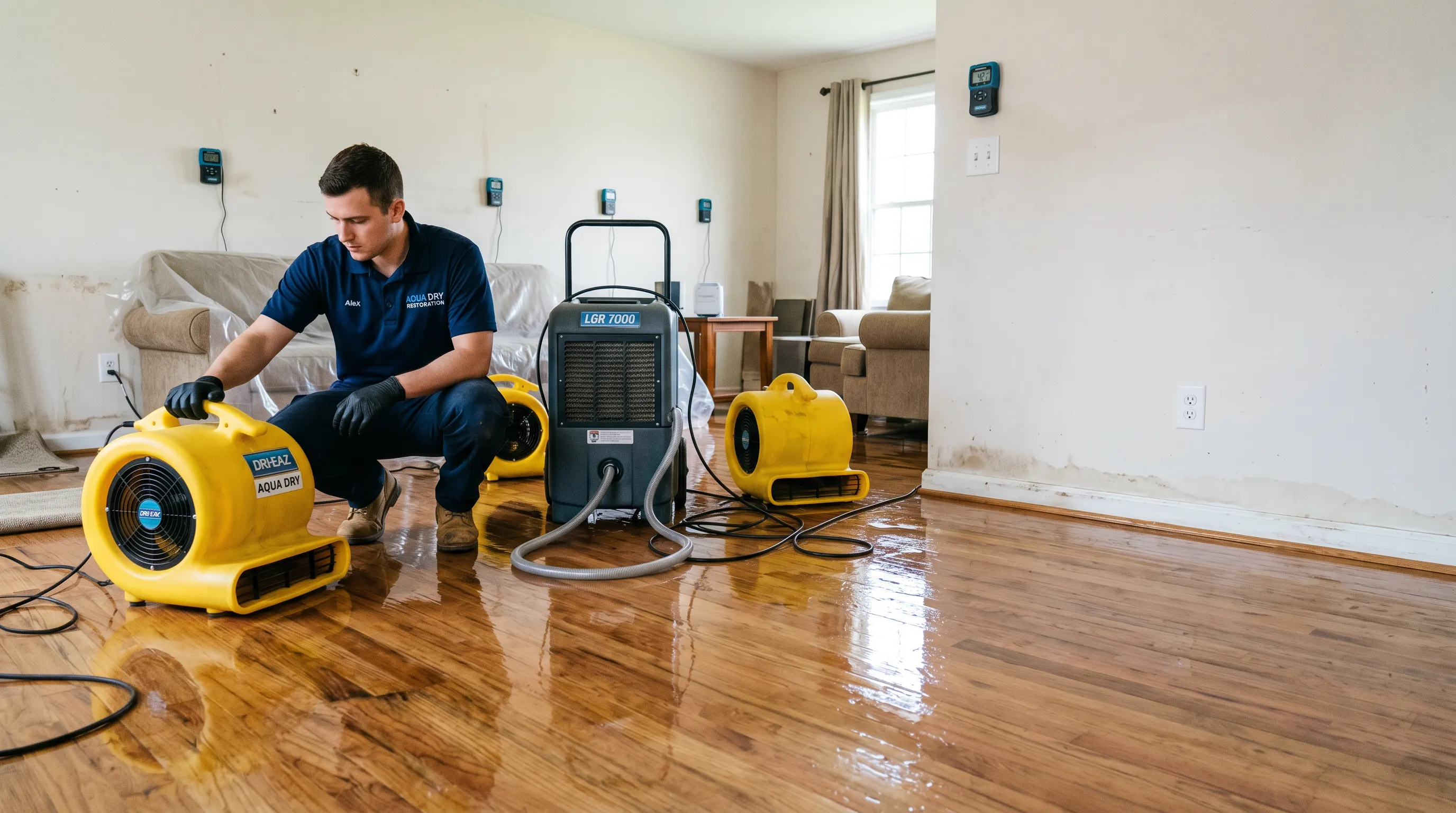
Water Damage Restoration professionals serving New York, NY
Key Takeaways
•New York has 16 listed water damage restoration professionals, with an exceptional average rating of 5.0 out of 5 stars — a strong indicator of a competitive, quality-driven local market.
•Water damage restoration in New York typically costs between $1,200 and $5,600, but high-rise buildings, basement flooding from nor'easters, and aging infrastructure in boroughs like the Bronx and Brooklyn can push costs toward the higher end.
•Every listed provider offers direct phone contact, which is critical in a city where a 60-minute or faster response window can mean the difference between drywall replacement and full structural remediation.
•New York City's hurricane season (June through November) and its vulnerability to coastal nor'easters make late summer and fall the highest-risk period — property owners should vet restoration companies before a storm, not during one.
•New York Mold Specialist leads all listed providers in total reviews with 347, making it the most reviewed restoration company in the dataset — a meaningful signal of consistent, large-scale service delivery across the five boroughs.
Water Damage Restoration in New York: What You Need to Know
New York City presents a uniquely challenging environment for water damage restoration. As a global financial center built on an island and a coastal peninsula, the city's 8.3 million residents contend with one of the most complex water damage risk profiles in the country. The humid continental climate means the city sees genuine extremes: brutal nor'easters that drive storm surges into low-lying neighborhoods like Red Hook and the Rockaways, summer tropical systems that overwhelm the aging combined sewer infrastructure, and winter cold snaps that freeze and burst pipes in pre-war apartment buildings citywide. What makes New York particularly demanding is the vertical density of the housing stock — a burst pipe on the 14th floor of a Manhattan co-op doesn't just damage one unit, it cascades through multiple floors, affecting numerous property owners and triggering complex insurance and liability situations that require restoration professionals with specific urban high-rise experience.
The local market reflects these demands. Of the 16 listed water damage restoration professionals operating in New York, all carry a perfect 5.0-star average — a figure that speaks to the high standards property owners and building managers expect in one of the world's most expensive real estate markets. These aren't small-town operations handling occasional basement floods; the top providers here manage everything from ground-floor commercial flooding in Midtown Manhattan to full basement remediation in brownstone-dense neighborhoods like Park Slope and Harlem. When evaluating your options, understand that speed and credentialing matter here more than almost anywhere else in the country. IICRC certification is the baseline expectation, not a bonus credential. With response time expectations set at 60 minutes or less, the best New York providers operate with staffing levels and equipment staging that allows rapid deployment across all five boroughs.
New York's building stock adds another layer of complexity. The city has thousands of buildings constructed before 1978, meaning any water intrusion that requires significant demolition may involve lead paint or asbestos-containing materials — both of which require licensed abatement professionals working in coordination with restoration crews. A restoration company that isn't familiar with New York City's specific Department of Buildings regulations, or that lacks experience coordinating with abatement contractors, is not equipped to fully restore an older New York property. Always confirm that your chosen provider understands these local regulatory requirements before any demolition work begins.
Local Tip: In New York City, water damage that affects shared walls or common building systems in co-ops, condos, or multi-family buildings typically triggers the building's master insurance policy in addition to individual unit coverage. Before signing any restoration contract, notify your building's superintendent or management company immediately — many buildings have preferred vendor relationships and specific protocols that, if bypassed, can complicate insurance reimbursement. This is particularly important in Manhattan and Brooklyn co-ops where board approval may be required for certain types of remediation work.
How Much Does Water Damage Restoration Cost in New York?
In New York City, water damage restoration costs range from $1,200 on the low end for minor, contained incidents — a small appliance leak in a single room, for example — to $5,600 or more for significant flooding, structural drying, or mold remediation triggered by sustained water intrusion. However, the New York market operates at a premium compared to national averages, and several city-specific factors drive costs upward. Labor costs in New York City are among the highest in the country, reflecting both the cost of living and union labor standards that apply to certain types of building work. Equipment access is also more complex — getting industrial dehumidifiers and air movers into a 20th-floor apartment via a service elevator, or staging equipment in a narrow Brooklyn row house, takes more time and crew coordination than a suburban single-family home scenario.
Building type is one of the most significant cost variables in New York. High-rise residential and commercial buildings require more complex drying plans, vapor mapping across multiple floors, and longer equipment deployment periods due to the density of building materials. Older buildings with plaster walls, solid masonry, and original hardwood floors require more conservative, slower drying protocols to avoid secondary damage — which means more billable equipment-days. Additionally, if water damage triggers mold growth (a serious concern in New York's humid summers), full mold remediation can add $2,000 to $6,000 or more to a project, depending on square footage and affected materials. Always request a detailed scope of work and line-item estimate before authorizing work, and confirm whether the estimate includes or excludes potential hazardous material testing.
Service
Low Estimate
High Estimate
Notes
Minor Water Damage (single room, no structural impact)
Low$1,200
High$2,000
Typical for appliance leaks or small pipe drips caught early. Common in NYC apartment kitchens and bathrooms. May involve drywall drying only.
Moderate Water Damage (multiple rooms, partial flooring/drywall removal)
Low$2,000
High$3,800
Most common scenario for burst pipes in pre-war buildings or nor'easter-related window seepage. Includes structural drying and limited demolition.
Severe Water Damage (full floor flooding, basement inundation, storm surge)
Low$3,800
High$5,600
Typical for basement flooding from heavy rainfall overwhelming NYC sewer infrastructure, or multi-floor pipe failures in high-rises. Includes extended equipment rental.
Mold Remediation Add-On (triggered by undetected or prolonged water damage)
Low$1,500
High$4,500
New York's humid continental climate makes mold a realistic secondary risk. NYC co-op and condo boards may require licensed mold assessors and remediators under New York State Labor Law Article 32.
Money-Saving Tip for New York Property Owners: New York City's Department of Environmental Protection (DEP) occasionally offers emergency assistance programs for homeowners affected by major flooding events, particularly in flood-prone areas like southeast Queens and Canarsie. Additionally, FEMA's National Flood Insurance Program (NFIP) covers many properties in designated New York City flood zones — check your flood zone status on the NYC Flood Hazard Mapper before a storm occurs, not after. Policyholders with NFIP coverage must use licensed contractors for restoration work to qualify for reimbursement, so confirm your chosen provider's licensing status up front. Getting two or three itemized estimates before authorizing major work is standard practice in New York and is explicitly encouraged by most insurance adjusters.
How to Choose the Right Water Damage Restoration
5 Questions to Ask Before Hiring
Are you IICRC-certified, and can you provide your certification number? The right answer is yes, with an immediate, specific response. IICRC (Institute of Inspection, Cleaning and Restoration Certification) is the industry standard for water damage restoration. In New York's dense, high-stakes market, any provider unwilling or unable to confirm active IICRC certification should be passed over immediately. Ask specifically for the Water Damage Restoration Technician (WRT) or Applied Structural Drying (ASD) credentials.
What is your guaranteed response time, and do you have crews available for New York's five boroughs? The right answer is 60 minutes or less, with clear confirmation of service area coverage. Given New York's traffic and geographic complexity, ask specifically whether the provider has staging locations in multiple boroughs or relies on a single dispatch point. A provider based only in midtown Manhattan may not reach a flooding incident in the Bronx or Staten Island within a meaningful response window during a major storm event.
Are you licensed to work in New York City, and are you familiar with the Department of Buildings permit requirements for water damage remediation? The right answer is yes, with specific familiarity with NYC DOB filing requirements. In New York City, certain types of restoration work require permits, especially when structural elements or mechanical systems are involved. A provider unfamiliar with local code requirements can create significant liability for property owners and delay completion.
Will you work directly with my insurance company, and can you provide a detailed line-item estimate before work begins? The right answer is yes to both. In New York, where restoration costs can be substantial and insurance claims complex — especially in multi-unit buildings with overlapping policies — you need a provider who handles direct insurance billing and provides granular documentation. Ask to see a sample scope-of-work document. Vague estimates are a significant red flag in this market.
Do you have experience with New York City's specific building types, including pre-war masonry buildings, high-rise residential towers, and mixed-use commercial spaces? The right answer demonstrates real familiarity, not generic assurance. Restoring a 1920s Harlem brownstone with plaster walls and original hardwood requires fundamentally different protocols than drying out a post-war concrete apartment building. Ask for specific examples of comparable projects completed in New York City.
Red Flags When Hiring Water Damage Restoration
Red Flags to Watch For When Hiring in New York City:
Storm Chasers and Out-of-State Contractors: After major nor'easters or flooding events, unlicensed contractors flood the New York market soliciting emergency work door-to-door. Any provider who cannot immediately demonstrate a New York State contractor license and a physical New York City business presence should be declined. Check license status through the NYC Department of Consumer and Worker Protection.
No Written Estimate or Pressure to Sign Immediately: Legitimate restoration companies in New York provide written, itemized estimates before mobilizing equipment. High-pressure tactics to sign authorization forms on-site before any assessment is completed are a classic contractor fraud pattern — one that New York City's consumer protection agencies investigate regularly.
Demanding Full Payment Upfront: Standard practice in the New York restoration industry is a deposit or partial payment at project start, with the balance due on completion. Any provider demanding full payment before work begins, especially in a post-storm emergency, should raise immediate concern.
No Evidence of Insurance or Inability to Name Their Carrier: Every legitimate restoration contractor operating in New York must carry general liability insurance and workers' compensation coverage. Ask for a certificate of insurance (COI) naming your property as an additional insured. Providers who cannot produce this document quickly are not operating professionally.
Reluctance to Document Work with Photos and Moisture Readings: Professional water damage restoration involves systematic moisture mapping using calibrated meters, documented with timestamped photographs at every phase. Any provider who does not offer this documentation as a standard deliverable is not following IICRC S500 standard protocols and will leave you without evidence needed for insurance claims or potential disputes.
Top-Rated Water Damage Restoration in New York
New York City's top-rated water damage restoration providers represent a cross-section of the market — from highly specialized mold and water removal outfits to full-service restoration companies capable of handling large commercial and residential projects across the five boroughs. All five of the leading companies in the dataset carry a perfect 5.0-star rating, though their review volumes vary significantly, which itself tells an important story about each company's scale and service track record.
Swift NYC Water Damage leads the dataset as the top-rated company with a 5.0-star rating across 16 reviews. The consistency of that perfect rating indicates a provider that is highly attentive to customer outcomes, likely operating at a focused scale where every job receives close attention. This profile often suits property owners who want hands-on, responsive service rather than a larger corporate operation. Restoration Doctor Water Removal of NYC holds a 5.0-star rating across 63 reviews — a volume that places it firmly in the mid-tier of established, tested providers. Sixty-three consistent five-star reviews in the New York market, where clients are notoriously demanding and quick to leave negative feedback, reflects genuine service reliability. Boyd Water Damage Restoration rounds out the mid-range review count with 39 reviews and a 5.0 rating, suggesting a focused operation with a strong repeat and referral client base.
The standout in terms of sheer review volume is New York Mold Specialist, which has accumulated 347 five-star reviews — more than five times the next highest in the dataset. In a market as active and critical as New York City, 347 reviews at a perfect rating is a remarkable signal of operational consistency, scale, and customer satisfaction. For property owners dealing with mold-related water damage — a scenario that is particularly common in New York's older building stock and humid climate — this provider's specialized positioning and review depth make it an obvious primary consideration. NY Flood Cleanup and Water Restoration of Manhattan rounds out the top five with 16 reviews at 5.0 stars, with its Manhattan-specific positioning suggesting particular familiarity with the unique restoration challenges of the borough's dense, high-value property environment.
When comparing these providers, consider not just the rating but the review count as a proxy for experience volume, and match the provider's apparent specialization to your specific damage type and property category.
Company
Rating
Reviews
Best For
Swift NYC Water Damage
5.0★
16
Property owners seeking highly attentive, focused service with direct provider involvement on every job across NYC
Restoration Doctor Water Removal of NYC
5.0★
63
Residential and commercial clients needing proven, reliable water removal with a demonstrated track record across dozens of NYC projects
New York Mold Specialist
5.0★
347
Properties with mold involvement or suspected mold growth following water damage — the most reviewed provider in the dataset by a wide margin
Boyd Water Damage Restoration
5.0★
39
Clients seeking a well-established restoration provider with strong referral networks and consistent results across NYC building types
NY Flood Cleanup & Water Restoration Of Manhattan
5.0★
16
Manhattan-specific flooding incidents including high-rise water intrusion, luxury residential restoration, and commercial flood response in Midtown and Downtown
Seasonal Guide for New York
Understanding New York City's seasonal water damage risk calendar is essential for both preparation and response planning. The city's humid continental climate creates distinct risk windows throughout the year, each associated with specific damage types that require different restoration approaches.
Summer (June through September) is defined by hurricane season risk. New York City sits at the northern edge of the Atlantic hurricane impact zone, and while direct landfalls are rare, tropical systems and their remnants regularly deliver catastrophic rainfall to the metro area. The September 2021 remnants of Hurricane Ida are a defining example — New York City recorded over 3 inches of rain in a single hour, overwhelming the combined sewer system and flooding basements and below-grade spaces across all five boroughs. For property owners in flood-prone zones, particularly in southeast Queens, Canarsie, the Rockaways, and coastal Staten Island, summer storm preparedness should include pre-identifying a restoration provider before any event occurs. During and immediately after a major storm, the best restoration companies in New York are fully booked within hours. Pre-scheduling a relationship with a provider — some offer priority service agreements — is a worthwhile investment for high-risk properties.
Fall (October through December) is nor'easter season. These large, slow-moving coastal storms are arguably a greater annual threat to New York than tropical systems, combining storm surge, sustained high winds, and heavy rainfall that drives water horizontally through building envelopes. Properties in Lower Manhattan, Brooklyn Heights, and waterfront neighborhoods in all five boroughs are particularly vulnerable to surge-related intrusion. Nor'easter water damage often involves saltwater contamination, which is classified as Category 3 (black water) damage under IICRC standards and requires more aggressive remediation protocols than freshwater incidents. Confirm that any provider you hire for nor'easter damage is familiar with Category 3 saltwater remediation — not all are.
Winter (December through March) brings a different but equally serious risk: frozen and burst pipes. New York's pre-war building stock — which comprises a disproportionate share of the city's residential units in the Bronx, Brooklyn, and upper Manhattan — includes steam heating systems, uninsulated pipe chases, and exterior wall plumbing that are highly vulnerable to sustained freezing temperatures. A single burst pipe in a multi-unit building can release hundreds of gallons of water before anyone detects it, affecting multiple floors simultaneously. Winter pipe-burst incidents are among the most complex restoration projects in New York because they combine emergency extraction, structural drying, and the logistical challenge of coordinating access across dozens of individual apartments with multiple tenants and owners.
Spring (March through May) is when snowmelt and seasonal rainfall combine with saturated ground to drive basement flooding across the outer boroughs, particularly in areas with high water tables like parts of Queens and the eastern Bronx. This is also when deferred winter maintenance becomes apparent — ice dams on older rooflines, failed window seals, and compromised foundation waterproofing all manifest as water intrusion events as temperatures rise. Spring is generally the best time for property owners to conduct proactive inspections and address minor vulnerabilities before they become major restoration events.
Frequently Asked Questions
How quickly should I expect a water damage restoration company to respond in New York City?
The industry standard response time expectation in New York is 60 minutes or less. In practice, this depends heavily on your specific location, time of day, and whether a major storm or weather event is simultaneously affecting multiple properties. The best providers in New York maintain staging locations across multiple boroughs and staff crews for 24/7 emergency response. During major events like nor'easters or post-tropical flooding, even top providers can experience extended response times due to simultaneous demand. This is the primary reason local experts consistently recommend pre-identifying your restoration provider before an emergency occurs — ideally before the start of hurricane season in June or before the peak nor'easter window in October. If response time during an active event exceeds 90 minutes with no clear communication from the provider, it is reasonable to contact an additional provider.
Does homeowner's insurance or my co-op/condo policy cover water damage restoration in New York City?
Standard homeowner's and renter's insurance policies in New York typically cover sudden and accidental water damage — burst pipes, appliance failures, roof leaks from a storm — but explicitly exclude flood damage caused by rising water from external sources. For flood coverage in New York City, you generally need a separate policy through FEMA's National Flood Insurance Program (NFIP) or a private flood insurer. In co-ops and condos, the situation is more complex: the building's master policy typically covers structural elements and common areas, while individual unit policies (HO-6) cover personal property and unit-specific improvements. Understanding exactly where building coverage ends and your personal coverage begins is critical before a water damage event occurs. All five top-rated providers in New York's dataset work directly with insurance carriers and can assist with claims documentation — confirm this capability before you hire.
Find Water Damage Restoration Professionals in New York
Browse top-rated contractors, compare reviews, and get free quotes.
What is the difference between water damage restoration and mold remediation, and do I need both after a flooding event in New York?
Water damage restoration refers to the immediate emergency response: water extraction, structural drying, dehumidification, and the removal and replacement of unsalvageable building materials. Mold remediation is a separate, subsequent process that becomes necessary when mold growth has already developed — typically within 24 to 72 hours of sustained moisture exposure. In New York City's humid continental climate, particularly during summer months when indoor humidity levels are already elevated, mold growth following water damage can occur faster than in drier climates. Whether you need both services depends on how quickly the water damage was addressed. If extraction and drying begin within the first 24 hours, mold remediation may not be necessary. If water was present for longer — common in vacation properties, rental units with slow-to-report tenants, or basements that flood undetected — mold assessment is strongly advisable. New York Mold Specialist, with 347 reviews at 5.0 stars, is specifically positioned for this combined water damage and mold scenario and represents the most reviewed specialist option in the current dataset.
Are there any New York City-specific regulations I should know about before starting water damage restoration work?
Yes, and they are more extensive than in most jurisdictions. First, New York City buildings constructed before 1978 may contain lead paint, and any restoration work involving demolition of painted surfaces must comply with NYC Local Law 1 (Lead Paint) and EPA RRP (Renovation, Repair, and Painting) rules, which require certified contractors. Second, buildings constructed before the 1980s may contain asbestos in floor tiles, pipe insulation, or ceiling materials — pre-demolition asbestos testing may be required under NYC Department of Environmental Protection regulations. Third, mold remediation in New York State is governed by Article 32 of New York State Labor Law, which requires mold remediators working on projects exceeding 10 square feet to be licensed by the New York State Department of Labor. Any restoration provider operating in New York City should be conversant in all three of these regulatory frameworks. If your chosen provider is not familiar with these requirements, that is a meaningful indicator of insufficient local expertise.
How do I evaluate whether a water damage restoration company in New York is giving me a fair estimate?
Start by requesting a written, line-item estimate that separately identifies extraction, equipment rental by day, demolition by square foot, disposal fees, structural drying, and any antimicrobial treatments. Reputable New York providers use standardized estimating software such as Xactimate, which aligns with what insurance adjusters use — estimates produced in this format are easier to negotiate with insurers and provide a clear audit trail. Compare at least two estimates for any project above $2,000. Be wary of estimates that are unusually low at the outset — in New York, lowball estimates are sometimes used to secure authorization, with significant add-ons introduced once work is underway. Conversely, estimates that are dramatically higher than one competitor without explanation warrant clarification. The $1,200 to $5,600 typical cost range provides a useful benchmark, though major flooding in large New York City properties can legitimately exceed this range. Ask any provider to explain line items that are unclear, and confirm that the estimate accounts for the full scope of work through completion, not just emergency extraction.
Best Water Damage Restoration in New York, NY — Complete 2026 Guide | Water Damage Restoration