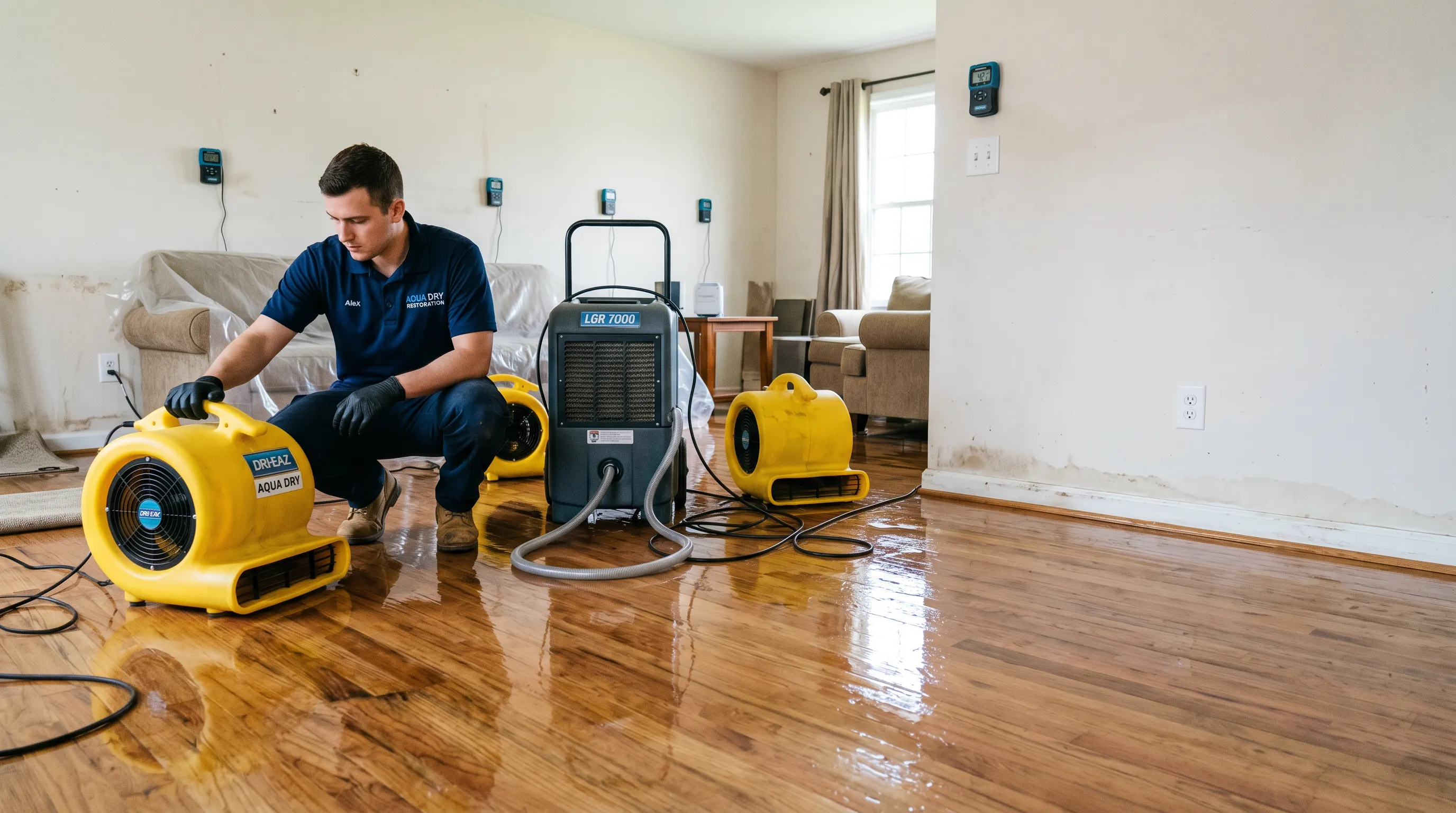
Water Damage Restoration professionals serving San Antonio, TX
Key Takeaways
•San Antonio has 20 listed water damage restoration professionals with an exceptional average rating of 4.9 out of 5 stars, indicating a competitive and high-quality local market.
•Sapphire Restoration LLC leads as the top-rated provider with a perfect 5.0 stars across 110 reviews, but four other companies also hold a 5.0 rating — making provider comparison critical.
Typical restoration costs in San Antonio range from $1,200 to $5,600 depending on water category, affected square footage, and how quickly you act after damage occurs.
•
•San Antonio's hot semi-arid climate and flash flood vulnerability — particularly during storm season — make rapid response and IICRC certification non-negotiable when selecting a contractor.
•Every one of the 20 listed businesses offers direct phone contact, meaning you should be able to reach a live professional within minutes during an emergency — hold any contractor accountable to a 60-minute or less response window.
Water Damage Restoration in San Antonio: What You Need to Know
San Antonio is a city of 1.5 million people built on limestone karst terrain that drains poorly during intense rain events. The Medina River, Salado Creek, and Leon Creek watersheds run through densely populated neighborhoods, and when the semi-arid climate delivers one of its periodic heavy downpours, those waterways overflow rapidly. The Texas Hill Country topography north and west of the city funnels runoff into these systems faster than most homeowners anticipate. The result: flash flooding is the dominant water damage risk in San Antonio, and it can turn a dry yard into a flooded garage in under an hour. This is not a city where you can wait until morning to call for help.
Beyond flash flooding, San Antonio's aging housing stock — including historic homes near downtown and the River Walk corridor — faces chronic plumbing vulnerabilities. Older clay and cast-iron pipes, combined with the city's alkaline water chemistry, degrade faster than modern PVC systems. Military-connected households, which make up a significant portion of the local rental market due to Joint Base San Antonio, also experience higher tenant-turnover rates, meaning deferred maintenance and undetected slow leaks are common. When water damage does occur, it moves quickly through the region's popular pier-and-beam and slab-on-grade construction styles, both of which present unique drying challenges that require experienced local contractors who understand these building types.
The San Antonio restoration market is robust. With 20 listed professionals averaging an outstanding 4.9 out of 5 stars, property owners have access to genuinely excellent service — but that high average also means the rating alone won't differentiate providers for you. What will differentiate them is response time, certifications, insurance claim experience, and specialized equipment for the specific type of water damage you are dealing with. This guide gives you the framework to make that call confidently, whether you are dealing with a burst pipe at 2 a.m. or a post-storm crawlspace flood.
Local Tip: San Antonio sits within Bexar County's flash flood alley — a geographic corridor stretching from Del Rio to Austin that is among the most flash-flood-prone regions in the United States. The National Weather Service frequently issues flash flood warnings with little notice in this area. If heavy rain is forecast, proactively locate your water shutoff valve and have your restoration provider's number saved in your phone before you need it. Many listed San Antonio providers offer free pre-storm consultations and can assess your property's drainage vulnerabilities in advance.
How Much Does Water Damage Restoration Cost in San Antonio?
In San Antonio, water damage restoration costs typically fall between $1,200 and $5,600 for residential properties, though complex commercial losses or multi-room flooding events can exceed that range significantly. The cost is driven by four primary variables: the category of water involved (clean, gray, or black water), the total square footage affected, the building materials that were saturated, and the speed at which remediation begins. In San Antonio's humid summer months — where interior temperatures frequently exceed 95°F and ambient humidity spikes during storm events — mold can begin developing in saturated drywall and insulation within 24 to 48 hours. Delays in mitigation do not just extend drying time; they compound the scope of damage and drive restoration costs sharply upward.
Another cost factor unique to San Antonio is the prevalence of Saltillo tile and Spanish-style architectural finishes in older homes, particularly in neighborhoods like Alamo Heights, King William, and Terrell Hills. These materials require specialized drying protocols that differ from standard hardwood or carpet remediation. Additionally, because San Antonio is a military city with a high proportion of tenants connected to Joint Base San Antonio, landlords and property managers frequently navigate complex insurance claim situations involving VA housing allowances and base housing contractors. Choosing a restoration company with documented insurance claim experience — not just mitigation expertise — can save thousands in out-of-pocket costs.
Service
Low Estimate
High Estimate
Notes
Minor Water Damage (single room, clean water, caught within 24 hrs)
Low$1,200
High$2,000
Typical for burst supply line or appliance leak. Faster response keeps costs in this range in San Antonio's hot climate.
Moderate Water Damage (multiple rooms, gray water, or delayed response)
Low$2,000
High$3,500
Common after flash flooding enters through doors or windows. May involve subfloor drying and content removal.
Severe Water Damage (whole-floor flooding, black water, or structural saturation)
Low$3,500
High$5,600
Includes sewage backups and storm surge damage. San Antonio's older sewer infrastructure makes this category more common than average.
San Antonio's heat accelerates mold growth after water events. Often billed separately from primary restoration and may require additional contractor coordination.
Money-Saving Tip: San Antonio homeowners should document every square foot of damage with time-stamped photos before any restoration work begins. Texas state law requires insurance companies to acknowledge a claim within 15 days, but disputes over scope — what was damaged versus what was pre-existing — are common and costly. A restoration contractor who provides a written, itemized damage assessment (not just a verbal estimate) gives your insurance adjuster less room to dispute line items. Several of the top-rated San Antonio providers specialize in insurance claim documentation as part of their standard intake process — ask about this explicitly before signing a work authorization.
How to Choose the Right Water Damage Restoration
5 Questions to Ask Before Hiring
Are your technicians IICRC-certified, and will a certified technician be on-site during the entire mitigation process? The right answer is yes to both. IICRC (Institute of Inspection, Cleaning and Restoration Certification) certification is the industry's primary credential. In San Antonio, where flash flooding can send multiple crews to the field simultaneously, some companies dispatch uncertified laborers while keeping certified staff at the office. Insist that the person running equipment in your home holds a current certification.
What is your guaranteed response time for emergency calls in San Antonio, and do you service my specific ZIP code? The right answer is 60 minutes or less for emergency dispatch, with explicit confirmation they cover your area. San Antonio spans a large geographic footprint from the South Side to Stone Oak — a company headquartered near the airport may quote 45 minutes to a North Side address but take 90 minutes to reach a property near Lackland. Get a specific, written time commitment.
Do you work directly with insurance companies, and can you provide a detailed line-item scope of work before any equipment is placed? The right answer is yes to working with insurers, and yes to a written scope before work begins. Contractors who refuse to provide written pre-work documentation are a liability in insurance claim disputes, which are common in Texas's contentious property insurance market.
What drying equipment will you deploy, and how will you monitor moisture levels throughout the process? The right answer includes specific mention of industrial air movers, dehumidifiers, and thermal imaging cameras — plus daily moisture readings documented in a drying log. San Antonio's summer heat affects drying dynamics significantly; equipment sizing must account for ambient temperature and humidity, not just square footage.
Can you provide references from recent water damage projects in San Antonio, specifically involving the type of damage I have experienced? The right answer is yes, with references you can actually call. Flash flood damage, slab leak remediation, and sewage backup cleanup each require different expertise. A company that primarily handles plumbing leaks may not have the storm water protocol experience needed for a post-flooding scenario common in San Antonio's flood-prone neighborhoods.
Red Flags When Hiring Water Damage Restoration
Red Flags to Avoid When Hiring in San Antonio:
Unsolicited door-knocking after a storm event: After major flash flood events in Bexar County, predatory contractors known as 'storm chasers' canvas affected neighborhoods. These out-of-state or unlicensed operators often pressure homeowners to sign work authorizations immediately, sometimes before an insurance adjuster has been contacted. No reputable San Antonio restoration company needs to knock on your door uninvited.
Demands for full payment upfront before work begins: Legitimate restoration companies in San Antonio typically work within insurance billing cycles and collect a deductible or partial payment at most before starting work. Requests for 100% upfront payment are a significant warning sign.
No physical local address or vague location claims: With 20 listed professionals operating in San Antonio, there is no reason to hire a company that cannot provide a verifiable local business address. Out-of-market operators frequently claim San Antonio service areas without maintaining local staff or equipment.
Unwillingness to provide a written moisture assessment or drying protocol: Any contractor who wants to place equipment and leave without explaining how moisture levels will be tracked and at what point drying is complete is operating without professional standards. This leads to either premature equipment removal — leaving hidden moisture — or unnecessary extended rental charges billed to your insurance.
Pressure to waive your insurance deductible or sign an Assignment of Benefits (AOB): While AOB arrangements are legal in Texas, contractors who aggressively push you to sign one before explaining the implications are prioritizing their billing relationship with your insurer over your interests. Understand any agreement you sign before work begins.
Top-Rated Water Damage Restoration in San Antonio
Among the 20 listed water damage restoration professionals serving San Antonio, five stand out by rating and review volume. Sapphire Restoration LLC holds a perfect 5.0-star rating across 110 reviews, making it the highest-rated provider in the market by combined score credibility. Its review volume is substantial enough to represent a genuine track record rather than a handful of early reviews. RestoPros of San Antonio also carries a 5.0 rating with 76 reviews, positioning it as a strong option for homeowners who want franchise-backed systems with locally accountable ownership — RestoPros operates as part of a structured national franchise model, which typically means standardized drying protocols and documented quality controls.
Restoration 1 Texas Hill Country brings the deepest review base of any top-rated provider, with 225 reviews supporting its 5.0-star rating. That volume of feedback across a perfect score is statistically meaningful and suggests consistent service delivery over a sustained period. The Texas Hill Country designation also signals coverage of properties in the northern suburbs and Hill Country edge communities where flash flood risk is particularly concentrated. Voda Cleaning and Restoration of Greater San Antonio rounds out the 5.0-star tier with 142 reviews, and its 'Greater San Antonio' service area branding indicates broader geographic reach across Bexar County and adjacent communities. San Antonio Water Damage and Restoration, rated 4.9 stars across 42 reviews, rounds out the top five. While its review count is the lowest in this group, a 4.9 average across 42 independently submitted reviews still reflects a highly consistent service record and should not be dismissed.
When evaluating these providers, do not simply sort by rating. All five carry effectively perfect scores. Instead, match the provider's service emphasis to your specific situation — storm flooding, plumbing failures, sewage events, or commercial property needs — and verify their availability and response time for your specific San Antonio location before making a commitment.
Company
Rating
Reviews
Best For
Sapphire Restoration LLC
5.0★
110
Homeowners seeking a high-touch, locally operated provider with a strong and consistent review track record in residential restoration
RestoPros of San Antonio
5.0★
76
Property owners who value franchise-standardized restoration protocols and documented quality systems backed by local ownership
Restoration 1 Texas Hill Country
5.0★
225
Properties in San Antonio's northern neighborhoods, Hill Country edge communities, and areas with elevated flash flood exposure; deepest review base of any top-rated local provider
Voda Cleaning & Restoration of Greater San Antonio
5.0★
142
Bexar County property owners needing broad geographic coverage, including suburban and outlying communities beyond the urban core
San Antonio Water Damage & Restoration
4.9★
42
Owners seeking a focused local operator with a strong rating and potentially faster scheduling due to smaller client volume
Seasonal Guide for San Antonio
San Antonio's hot semi-arid climate creates distinct seasonal water damage patterns that every property owner in Bexar County should understand. Unlike coastal Texas cities where hurricane season drives the majority of water damage claims, San Antonio's primary seasonal risk is concentrated in late spring and early fall when atmospheric instability combines with Gulf moisture surges to produce intense, localized storm cells. These events can drop several inches of rain within a single hour on a neighborhood that received no rain the day before — precisely the conditions that overwhelm drainage infrastructure and send water into structures through window wells, doorways, and below-grade entries.
Spring (March through May) is statistically the highest-risk period for flash flooding in the San Antonio metro. The Edwards Plateau terrain north and west of the city funnels runoff rapidly toward populated creek corridors. Property owners in neighborhoods like Leon Valley, Helotes, and those near Salado Creek should be especially prepared during this window. Restoration providers are in peak demand during spring storm sequences, and response times can stretch under high-demand conditions — having a provider relationship established before an emergency gives you a meaningful advantage.
Summer (June through August) brings extreme heat but typically drier conditions. However, summer is when slow plumbing failures — pinhole leaks in copper supply lines, failing water heater connections, sweating pipes in unconditioned spaces — cause the most secondary damage. San Antonio's intense heat accelerates mold colonization in concealed wall cavities and under slabs where slow leaks go unnoticed. The city's hot semi-arid climate means that a supply line leak behind a bathroom wall can support active mold growth within 48 hours, faster than many property owners realize. Summer is also when air conditioning condensate drain failures surge — a relatively minor maintenance issue that becomes a serious subfloor saturation problem if left unaddressed.
Fall (September through November) carries residual storm risk as Gulf systems occasionally track inland toward San Antonio, and the transition to cooler weather begins. While San Antonio does not face the pipe freeze risks common in northern Texas cities, winter cold snaps — which can bring overnight temperatures into the low twenties — have historically caused significant pipe bursts in homes with inadequate attic insulation or exterior pipe exposure. The February 2021 winter storm event demonstrated dramatically that San Antonio's housing stock is not designed for sustained freezing temperatures, and many properties in the city remain vulnerable to similar events. Having a water damage restoration provider's emergency contact readily accessible from October through February is a practical precaution that tens of thousands of San Antonio homeowners learned the hard way.
Year-round, San Antonio's military population creates a specific seasonal dynamic: Permanent Change of Station (PCS) moves peak in late spring and summer, meaning a large number of rental and newly purchased properties change hands with potential deferred maintenance issues undisclosed. New tenants and owners discovering slow leaks or prior water damage evidence shortly after moving in are a consistent feature of the San Antonio market. If you are taking possession of a property, requesting a professional moisture assessment before move-in — offered by several top-rated San Antonio providers — can surface hidden damage before it becomes your legal and financial problem.
Frequently Asked Questions
How fast should a water damage restoration company arrive in San Antonio?
The industry standard for emergency water damage response is 60 minutes or less from the time of your call. In San Antonio, this is achievable given the density of listed providers across Bexar County, but it depends heavily on your location and the company's actual staffing capacity. The sprawling geography of San Antonio — stretching from the South Side near Brooks City Base to the Far North Side near Stone Oak — means that a 60-minute commitment made by a company based in one part of the city may not be realistic for a property on the opposite end. Always confirm response time for your specific address, not a general service area claim. During peak demand periods such as spring flooding events, response times industry-wide tend to extend — this is another reason to establish a provider relationship before an emergency rather than searching cold during a crisis.
Does homeowner's insurance cover water damage restoration in San Antonio?
Standard homeowner's insurance policies in Texas typically cover sudden and accidental water damage — burst pipes, appliance failures, and storm-driven water intrusion through openings created by a covered peril. They typically do not cover gradual damage, flooding from rising groundwater, or sewer backup unless specific endorsements are added. In San Antonio, where flash flooding is the primary water damage risk, standard homeowner's policies frequently leave property owners uncovered for the exact events they most need protection against. A separate flood insurance policy through the National Flood Insurance Program (NFIP) or a private flood carrier is strongly recommended for any property within or near Bexar County's designated Special Flood Hazard Areas. Ask your restoration provider whether they have experience working with both standard homeowner's insurers and NFIP flood claims — they are handled through completely different documentation and reimbursement processes.
Find Water Damage Restoration Professionals in San Antonio
Browse top-rated contractors, compare reviews, and get free quotes.
What is IICRC certification and why does it matter in San Antonio?
The IICRC — Institute of Inspection, Cleaning and Restoration Certification — is the primary professional standards body for the water damage restoration industry. IICRC-certified technicians have completed structured training in the science of drying, moisture measurement, contamination assessment, and restoration procedures. The IICRC's S500 standard specifically governs water damage restoration and defines the protocols for categorizing water damage, setting up containment, and determining when a structure is sufficiently dry. In San Antonio, where heat and humidity during storm season create accelerated mold growth conditions, having IICRC-certified technicians who understand the psychrometric science of drying — not just how to place fans — is directly relevant to whether your property is properly dried or whether hidden moisture leads to a secondary mold problem weeks later. When evaluating San Antonio providers, ask for the specific IICRC credential held by the technician who will be on-site, not just whether the company holds a general certification.
How long does water damage restoration typically take in San Antonio?
The drying phase of water damage restoration — using industrial air movers and dehumidifiers — typically takes three to five days for standard residential water damage under normal conditions. In San Antonio during summer months, the extreme ambient heat can accelerate surface drying while simultaneously complicating deep structural drying, because hot air holds more moisture and can drive humidity into building cavities if equipment is not properly configured. A properly executed restoration includes daily moisture readings documented in a drying log, with equipment removed only when affected materials reach their dry standard as measured by calibrated moisture meters — not on a predetermined schedule. The full restoration process, including any necessary demolition, rebuilding of affected materials, and final cleaning, can range from one week to four to six weeks depending on the scope of damage. Insurance claim processing in Texas runs parallel to this timeline and should not delay mitigation work.
What should I do immediately after discovering water damage in my San Antonio home?
The first 60 minutes after discovering water damage are the most consequential for limiting both the extent of damage and the ultimate restoration cost. First, stop the water source if possible — locate and shut off your main water supply valve, typically near the street or in a utility area. If the water source is storm-related or sewer-related and cannot be shut off, create barriers to limit spread where possible. Second, cut power to any affected areas at the breaker panel — do not wade into standing water with electricity active. Third, call a listed San Antonio restoration provider immediately rather than waiting to assess the full scope yourself. Fourth, begin documenting everything with time-stamped photos and video from multiple angles before anything is moved or cleaned up — this documentation is essential for your insurance claim. Fifth, contact your insurance company to report the claim and get a claim number, which you will provide to your restoration contractor. Do not begin cleanup or throw away any damaged materials before your insurance adjuster has an opportunity to assess or your restoration contractor has documented the full scope.