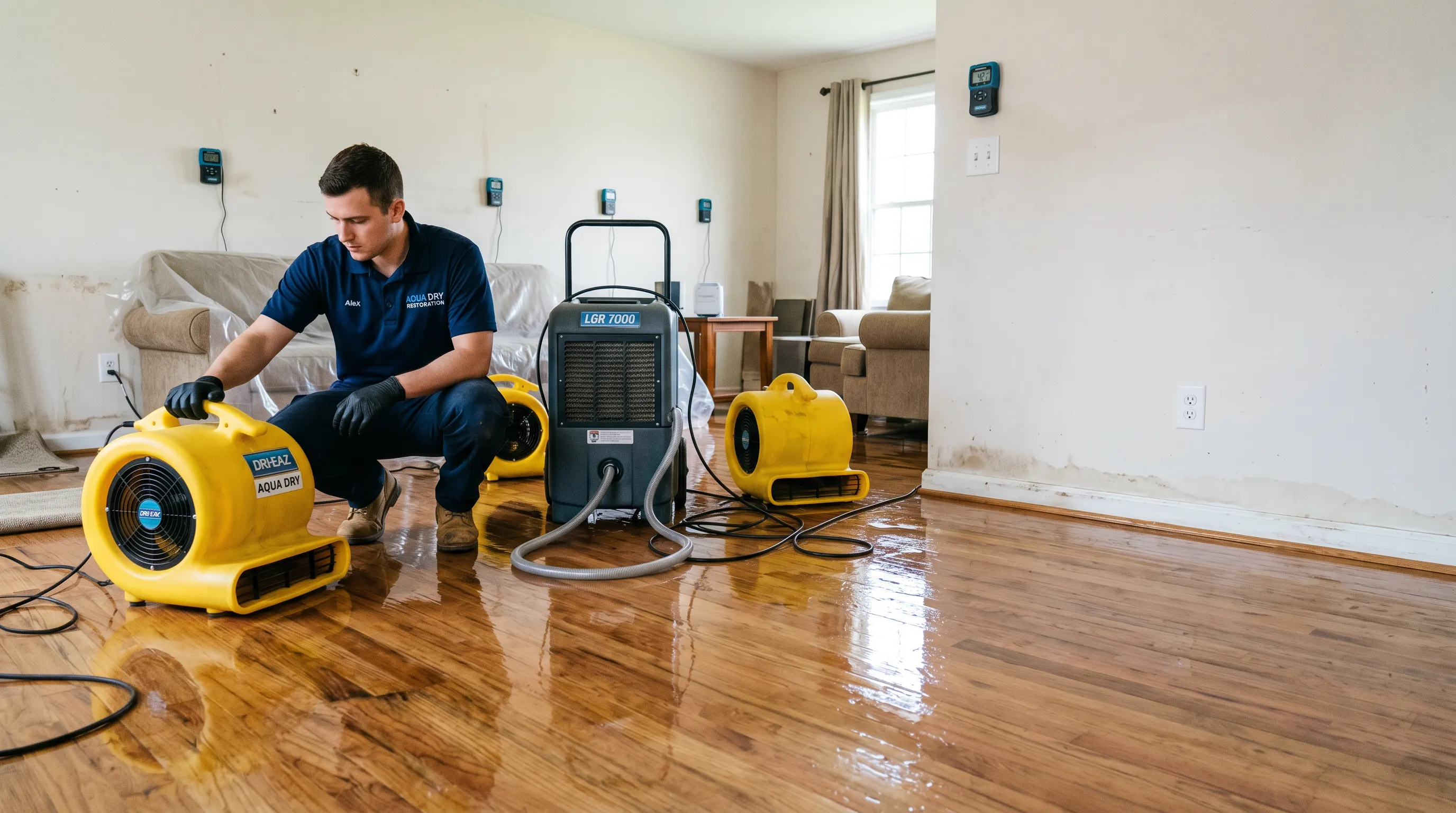
Water Damage Restoration professionals serving San Diego, CA
Key Takeaways
•San Diego has 20 listed water damage restoration professionals with an average rating of 4.9 out of 5 stars — one of the strongest local markets in Southern California.
•The top-rated company, DRYmedic Restoration Services of San Diego, holds a perfect 5.0-star rating across 70 reviews, while Ramm Water Damage Restoration and Mold Remediation leads in total reviews with 455 at a perfect 5.0 rating.
Typical restoration costs in San Diego range from $1,200 to $5,600 depending on water category, affected square footage, and whether mold remediation is required — coastal humidity can push jobs toward the higher end.
•
•San Diego's Mediterranean climate creates year-round water damage risk: El Niño-driven winter storms and atmospheric river events are the leading causes of structural water intrusion, while aging pipes in older neighborhoods like North Park and Golden Hill account for a significant share of interior flood calls.
•All 20 listed businesses offer direct phone contact, and industry best practice is a response time of 60 minutes or less — always confirm this commitment before signing any authorization form.
Water Damage Restoration in San Diego: What You Need to Know
San Diego occupies a unique position in the water damage landscape. Its Mediterranean climate — warm, dry summers and mild but occasionally intense winters — creates a deceptive sense of low risk. In reality, the region experiences some of the most complex water intrusion scenarios in the Western United States. Atmospheric river events, which can dump several inches of rain in 24 to 48 hours on a city that averages only about 10 inches annually, overwhelm drainage systems, flood basements, and penetrate building envelopes that were never designed for sustained moisture exposure. The January 2024 storm system that caused widespread flooding across Mission Valley and San Diego's coastal communities is a recent example of just how quickly standing water can become a structural emergency.
Beyond storm-related flooding, San Diego's aging housing stock presents a persistent interior water damage threat. Neighborhoods like North Park, South Park, Golden Hill, and parts of Chula Vista contain homes built in the 1940s through 1970s with galvanized steel plumbing that has long surpassed its service life. Pipe failures, slow leaks behind walls, and failing water heaters are among the most common calls restoration companies receive year-round. Add to that San Diego's coastal humidity — particularly in communities like Ocean Beach, Pacific Beach, and Coronado — and you have conditions where even minor water intrusion can escalate to mold growth within 24 to 48 hours if not addressed with industrial drying equipment.
With 20 listed water damage restoration professionals serving the San Diego metro area and an average rating of 4.9 stars, the local market is competitive and the quality bar is high. That said, not every company is equipped to handle every scenario. A provider that excels at residential pipe burst response may not have the commercial-grade equipment or project management structure to handle a multi-unit loss at a Mission Valley apartment complex. Understanding the scope of your damage — and matching it to the right contractor — is the single most important decision you will make in the first hour after discovering water damage.
San Diego Local Tip: If your property is in a FEMA-designated Special Flood Hazard Area — which includes portions of the San Diego River floodplain and low-lying areas near Mission Bay — your restoration company should be familiar with FEMA documentation requirements for flood insurance claims. Ask specifically whether the company has experience with National Flood Insurance Program (NFIP) claims, as the documentation standards differ significantly from standard homeowner's insurance claims.
How Much Does Water Damage Restoration Cost in San Diego?
Water damage restoration costs in San Diego typically range from $1,200 to $5,600 for residential jobs, though complex losses involving Category 3 contaminated water, structural drying of multiple rooms, or concurrent mold remediation can push totals well above that range. Several factors specific to San Diego drive costs higher than national averages. First, the region's coastal humidity — particularly in ZIP codes west of Interstate 5 — means drying times are extended, which increases equipment rental days and labor hours. A job that might take three days to dry in Phoenix can take five or six days in Ocean Beach or La Jolla under the same damage conditions. Second, San Diego's construction costs are among the highest in California, meaning post-drying reconstruction — drywall replacement, flooring, cabinetry — carries a premium that national cost calculators often underestimate.
Insurance coverage is the other critical variable. Most standard homeowner's insurance policies in California cover sudden and accidental water damage — a burst pipe, an appliance failure — but exclude flooding from external sources unless you carry a separate flood policy. San Diego homeowners in coastal and floodplain zones should review their declarations page carefully before assuming coverage. When getting estimates, ask each company to provide a line-item scope of work that separates mitigation (drying, demolition of unsalvageable materials) from restoration (reconstruction). This separation makes it easier to negotiate with your insurer and prevents disputes about what was authorized.
Service
Low Estimate
High Estimate
Notes
Water Extraction & Emergency Drying (Single Room)
Low$1,200
High$2,000
Covers water removal, industrial air movers, and dehumidifiers for a contained loss such as a bathroom overflow or small appliance leak. Coastal San Diego humidity may add 1–2 drying days.
Multi-Room Structural Drying & Demolition
Low$2,500
High$4,500
Applicable to pipe bursts or roof intrusion affecting two or more rooms. Includes moisture mapping, removal of wet drywall and insulation, and drying documentation for insurance. Common in older North Park and Golden Hill homes.
Category 3 Contaminated Water Restoration (Sewage/Floodwater)
Low$3,500
High$5,600
Required when water source is sewage backup, storm overflow, or groundwater intrusion. Includes full PPE protocols, antimicrobial treatment, and disposal of all porous materials. San Diego's aging sewer infrastructure makes this a frequent scenario in older neighborhoods.
Mold Remediation Combined with Water Restoration
Low$2,000
High$6,500
When water damage is discovered late — common after slow leaks behind walls — mold remediation must be performed alongside structural drying. San Diego's coastal humidity accelerates mold colonization; remediation scope can expand significantly based on laboratory testing results.
Money-Saving Tip for San Diego Homeowners: Before signing a direction-to-pay or assignment of benefits form, get at least two written estimates. San Diego's competitive restoration market — 20 listed providers with a 4.9-star average — means you have legitimate options. Also, request that your chosen company perform moisture mapping with a calibrated meter (not just visual inspection) before any demolition begins. This prevents unnecessary material removal, which is one of the most common sources of inflated restoration invoices in California.
How to Choose the Right Water Damage Restoration
5 Questions to Ask Before Hiring
Are you IICRC-certified, and which specific certifications does your lead technician hold? The right answer includes at minimum the Water Damage Restoration Technician (WRT) credential. Companies with Applied Structural Drying (ASD) certification are better equipped for the extended drying timelines common in San Diego's coastal humidity. Ask to see the certificate — it should be current, not expired.
What is your guaranteed response time, and do you provide 24/7 emergency service? The industry standard is 60 minutes or less for emergency response. In a city the size of San Diego, a company based in El Cajon may not be able to reach a Pacific Beach property in that window during peak traffic hours. Confirm the company has technicians staged locally, not just a call center.
Will you work directly with my insurance company, and do you have experience with my specific carrier? The right answer is yes to both. San Diego restoration companies that regularly handle State Farm, Allstate, and USAA claims — USAA is especially relevant given San Diego's large military population — understand the documentation requirements those carriers impose. A company that cannot produce drying logs and moisture readings in the format your adjuster expects can delay your claim by weeks.
Can you provide a written, line-item estimate before work begins, and what is your protocol if the scope expands? The right answer is an unqualified yes to the written estimate. Scope expansion is common — especially in older San Diego homes where opening walls reveals additional moisture damage or mold. A reputable company will pause, document the new condition with photos, contact your insurer for supplemental authorization, and get your written approval before proceeding.
Do you perform both mitigation and reconstruction, or will I need to hire a separate contractor for repairs? Both models are legitimate, but knowing upfront prevents gaps in accountability. If the company only mitigates and hands off reconstruction, ask for specific contractor referrals they have worked with before in San Diego — and confirm those contractors are licensed with the California Contractors State License Board (CSLB). You can verify any contractor license at cslb.ca.gov.
Red Flags When Hiring Water Damage Restoration
Red Flags to Watch For When Hiring a San Diego Water Damage Restoration Company:
Pressure to sign an assignment of benefits (AOB) or direction-to-pay form before any assessment is performed. Legitimate companies explain the insurance process; they do not demand you sign away claim control at the door.
No physical San Diego address or local crew. Storm-chasing out-of-state contractors frequently appear after major atmospheric river events in San Diego. If the company cannot tell you exactly where their equipment is staged and how many local technicians are on call, treat that as a serious concern.
Estimates given over the phone without a site visit and moisture mapping. Water damage cannot be accurately scoped without calibrated moisture meters and thermal imaging. Any company quoting a firm price without setting foot on your property is guessing — and that guess is rarely in your favor.
No IICRC certification and no evidence of current insurance. California does not specifically license water damage restoration companies as a standalone trade, which means the barrier to entry is low. IICRC certification and general liability insurance (minimum $1 million per occurrence) are the primary industry safeguards. Ask for certificates of insurance, not just verbal assurances.
Recommending full gut demolition before completing drying cycle documentation. Aggressive demolition before moisture readings confirm drying failure is a known billing inflation tactic. Reputable companies following IICRC S500 standards document moisture levels daily and only remove additional materials when readings support the decision.
Top-Rated Water Damage Restoration in San Diego
Among the 20 listed water damage restoration professionals serving San Diego, five companies stand out for maintaining perfect 5.0-star ratings with substantial review volume — a combination that is statistically difficult to sustain and reflects consistent operational performance rather than a handful of favorable experiences.
DRYmedic Restoration Services of San Diego holds a 5.0-star rating across 70 reviews, positioning it as the top-rated company in this guide. DRYmedic operates as part of a national franchise network with local ownership, which typically means access to commercial-grade equipment inventories alongside the accountability structure of owner-operated service. Their rating consistency across 70 reviews suggests strong performance on both technical execution and customer communication — the two most common failure points in restoration.
PuroClean of Clairemont carries a 5.0-star rating with 139 reviews, making it one of the most reviewed perfect-rated companies in the local market. PuroClean's Clairemont location serves the central San Diego corridor effectively, with proximity to Mission Valley, Linda Vista, and the coastal communities to the west. The volume of reviews at a perfect rating is a meaningful signal of repeatable service quality.
Smart Dry Restoration maintains a 5.0-star rating across 96 reviews. The company name and review profile suggest a focused specialization in structural drying — the most technically demanding phase of restoration and the one where equipment quality and technician training matter most.
Risk Free Serv Water Damage Repair San Diego holds a 5.0-star rating with 124 reviews, indicating strong customer volume and consistent satisfaction. The company's name suggests a positioning around risk reduction and transparent process — qualities that align well with the insurance claim navigation that most San Diego homeowners need.
Ramm Water Damage Restoration and Mold Remediation leads the entire San Diego market in total review volume with 455 reviews at a perfect 5.0-star rating. This level of review accumulation — nearly three times the next closest company on this list — at a maintained perfect rating is exceptionally rare and reflects years of consistent service delivery across a high volume of completed jobs. The explicit inclusion of mold remediation in the company name is also relevant given San Diego's coastal humidity, which makes concurrent mold assessment a near-universal requirement on any job where water intrusion went undetected for more than 48 hours.
Company
Rating
Reviews
Best For
DRYmedic Restoration Services of San Diego
5.0★
70
Homeowners seeking franchise-backed resources with local ownership accountability; strong for insurance-involved residential losses across the San Diego metro
PuroClean of Clairemont
5.0★
139
Central San Diego corridor including Clairemont, Mission Valley, and Linda Vista; high review volume at perfect rating signals consistent multi-technician operation
Smart Dry Restoration
5.0★
96
Structural drying-focused losses where equipment quality and drying documentation for insurance claims are the primary concern
Risk Free Serv Water Damage Repair San Diego
5.0★
124
Homeowners who prioritize transparent process and insurance claim coordination; strong review volume suggests reliable customer communication throughout the job
Ramm Water Damage Restoration and Mold Remediation
5.0★
455
Highest review volume in the San Diego market at a perfect rating; best choice when mold remediation is required alongside water restoration, and for those who weight proven track record above all other factors
Seasonal Guide for San Diego
San Diego's Mediterranean climate creates a seasonal water damage pattern that is distinct from most other major U.S. cities and directly shapes how you should think about restoration preparedness throughout the year.
Winter (November through March) is San Diego's primary high-risk season for water damage — and the window that most property owners underestimate. The region is climatologically susceptible to atmospheric river events, which are elongated corridors of concentrated moisture that originate in the Pacific and can deliver months' worth of rainfall in a matter of days. El Niño years amplify this risk significantly. The 2024 and 2023 storm seasons demonstrated how quickly Mission Valley, Fairmount Avenue corridors, and low-lying areas near the San Diego River can flood. During active storm periods, restoration companies across the city operate at full capacity, which means response times extend and equipment availability tightens. If you live in a flood-prone area or have a property with a flat roof, a compromised slab, or known drainage issues, having a relationship with a restoration company before an event — including knowing their number and your insurance policy number — is not overcaution, it is basic preparedness.
Spring (April through May) brings a transitional period where storm risk recedes but interior water damage calls remain elevated. Winter moisture that penetrated wall cavities and subfloor assemblies during storm season begins to manifest as mold, musty odors, and efflorescence on concrete surfaces. Spring is the right time to commission a professional moisture assessment if your property experienced any flooding or roof intrusion during the preceding winter — catching residual moisture before summer heat sets mold growth conditions is far less costly than a full remediation in July.
Summer (June through September) is San Diego's dry season, but it is not without risk. Marine layer conditions along the coast maintain relative humidity levels that can sustain mold growth if moisture is already present in wall cavities. Inland areas of San Diego County, including Santee, El Cajon, and the East County communities, experience higher temperatures that can stress aging plumbing — particularly older copper and galvanized systems — leading to pinhole leaks and joint failures. San Diego does not experience the hurricane-driven coastal flooding risk of Gulf and Atlantic cities, but the nominal June-through-November Atlantic hurricane season is noted on the national calendar; San Diego's equivalent risk during this period is interior plumbing failure from thermal stress, not coastal surge.
Fall (October through November) is the transitional season when the first significant rain events of the year expose the deferred maintenance that accumulated through the dry summer. Clogged gutters, cracked caulking around windows and penetrations, and flat roof membranes that failed to get inspected during summer are the primary culprits. The first atmospheric river of the season — which can arrive as early as October in La Niña years — consistently triggers a surge in emergency calls to San Diego restoration companies. Scheduling a pre-season property inspection in September, before the first storm, is consistently the most cost-effective water damage prevention step a San Diego property owner can take.
Frequently Asked Questions
How quickly should I expect a water damage restoration company to arrive in San Diego?
The industry standard response time for emergency water damage response is 60 minutes or less from the time you call. In San Diego, geography and traffic patterns matter — a company based in El Cajon may struggle to reach Ocean Beach within that window during the I-8 commute rush, while a company with equipment staged in Kearny Mesa can cover most of the city reliably. When you call, ask specifically where the responding crew is currently located and what their realistic ETA is given current conditions. If the answer is vague or they cannot commit to a window, that tells you something about their operational readiness. All 20 listed water damage restoration professionals in San Diego offer direct phone contact, so you should be speaking to someone who can answer that question immediately.
Does homeowner's insurance cover water damage in San Diego?
Standard homeowner's insurance policies in California typically cover sudden and accidental water damage — a pipe that bursts without warning, a washing machine supply line that fails, an HVAC condensate drain that overflows. What standard policies generally do not cover is flooding from external sources: storm surge, overland flooding from rivers or creeks, or groundwater intrusion through foundation walls. For those risks, a separate flood insurance policy through the National Flood Insurance Program (NFIP) or a private flood carrier is required. Given that portions of San Diego's Mission Valley, along the San Diego River, and in coastal low-lying areas are designated Special Flood Hazard Areas by FEMA, flood coverage is worth serious consideration for properties in those zones. Additionally, slow leaks — a dripping pipe inside a wall that causes damage over weeks or months — are frequently disputed by insurers on the grounds that the homeowner should have discovered and repaired the issue earlier. Document any sudden water loss with photos immediately and call your insurer before authorizing any restoration work.
Find Water Damage Restoration Professionals in San Diego
Browse top-rated contractors, compare reviews, and get free quotes.
What does IICRC certification mean, and why does it matter for San Diego restoration companies?
IICRC stands for the Institute of Inspection Cleaning and Restoration Certification, the globally recognized standard-setting body for the restoration industry. IICRC certification is not a business license — it is a credential earned by individual technicians who pass written examinations and demonstrate field proficiency. The most relevant credentials for water damage restoration are the Water Damage Restoration Technician (WRT) and Applied Structural Drying (ASD) certifications. The ASD credential is particularly relevant in San Diego because it covers the science of drying in variable humidity environments — precisely the condition technicians face when working in coastal neighborhoods with elevated relative humidity. California does not maintain a state-level licensing requirement specific to water damage restoration, which means IICRC certification is the primary quality signal available to consumers. Always ask to see current IICRC credentials, not expired certificates, and not just a company-level claim of certification — the credential belongs to the individual who will be on your job.
How long does water damage restoration typically take in San Diego?
The structural drying phase of water damage restoration — removing moisture from building materials to bring them back to pre-loss moisture content — typically takes three to five days for a standard residential loss under controlled conditions. In San Diego's coastal communities, where ambient relative humidity is consistently higher than inland areas, drying times frequently run five to seven days for the same scope of work. This is not a shortcut that can be taken — rushing the drying phase and closing walls over materials that have not reached acceptable moisture content is the most common cause of mold growth following restoration. Reputable companies following IICRC S500 standards will produce daily drying logs with calibrated meter readings and will not recommend closing walls until those readings confirm dryness. The total project timeline from emergency call to completed reconstruction depends on the scope of damage and the reconstruction required, but for a typical residential pipe burst in San Diego, plan for two to four weeks from initial response to move-back-in completion.
What should I do immediately after discovering water damage in my San Diego home?
The first priority is safety: if there is any possibility that water has reached electrical panels, outlets, or wiring, do not enter the space until power is shut off at the breaker. If water is still actively entering the structure — from a burst pipe, an overflowing fixture, or a roof breach — your first call is to stop the source. Shut off the main water supply if it is a plumbing failure; for roof intrusion during a storm, interior tarping and repositioning of contents is the priority. Once the source is controlled, call a restoration company immediately — every hour of delay allows moisture to migrate further into wall cavities, subfloor assemblies, and insulation, and San Diego's coastal humidity means mold colonization can begin within 24 to 48 hours on wet porous materials. While waiting for the crew, document everything with photographs and video before anything is moved or removed. Call your insurance company to open a claim, but do not let the insurance timeline delay the restoration response — mitigation cannot wait for an adjuster's inspection.
Best Water Damage Restoration in San Diego, CA — Complete 2026 Guide | Water Damage Restoration