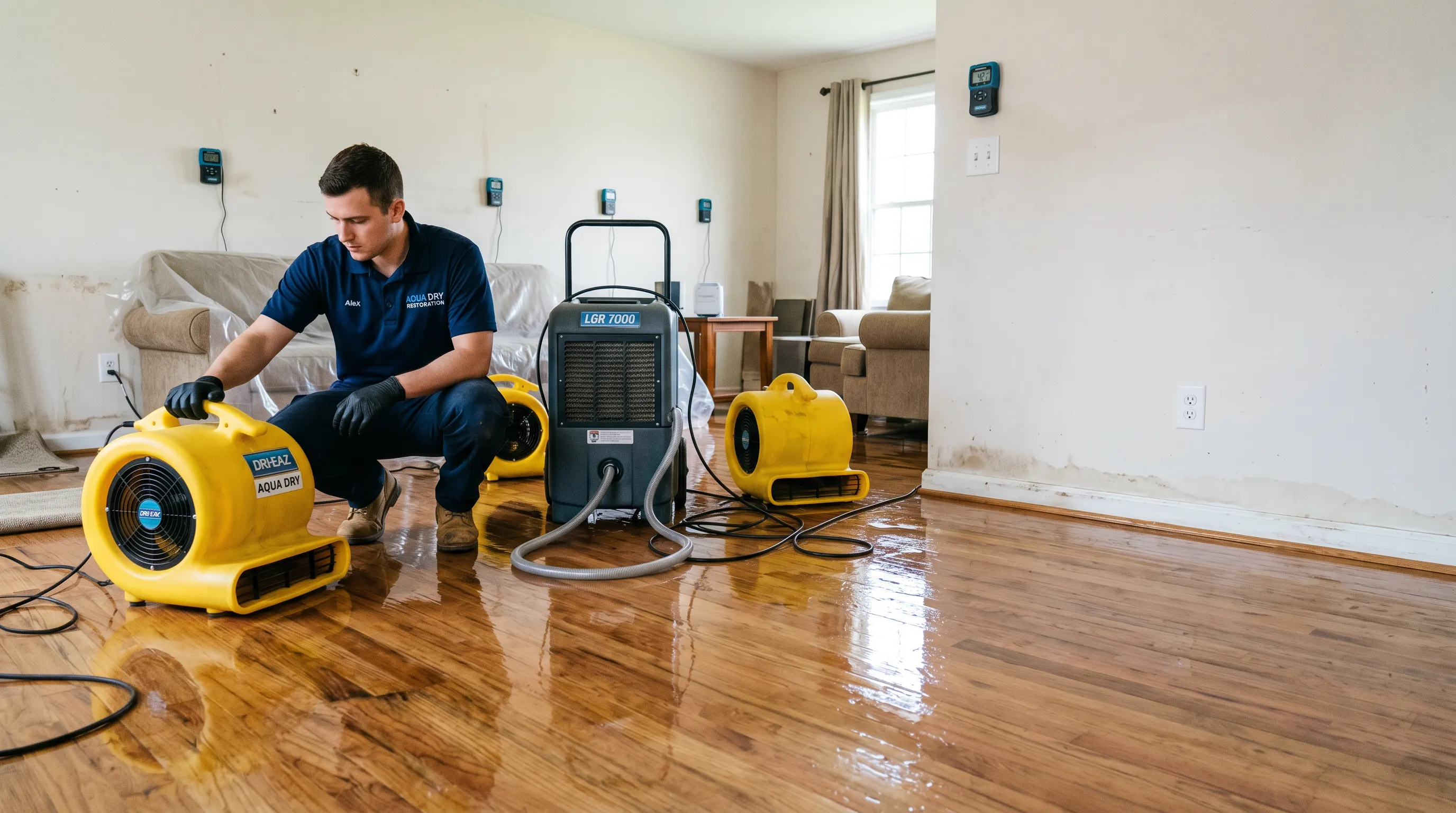
Water Damage Restoration professionals serving San Jose, CA
Key Takeaways
•San Jose has 19 listed water damage restoration professionals, with an average rating of 4.9 out of 5 stars — indicating a highly competitive and quality-driven local market.
•The typical cost for water damage restoration in San Jose ranges from $1,200 to $5,600, depending on the scope of damage, water category, and affected materials like drywall, hardwood, or subfloor.
•Five companies in the San Jose market hold a perfect 5.0-star rating, led by 911 Restoration of San Jose with the highest review count at 126, giving it the strongest signal of consistent performance.
•Every listed water damage restoration business in San Jose offers direct phone contact, meaning 24/7 emergency response is accessible — look for providers who can reach your property within 60 minutes or less.
•San Jose's Mediterranean-influenced climate, with wet winters and occasional atmospheric river events, makes late fall through early spring the highest-risk period for water intrusion, roof leaks, and storm-driven flooding.
Water Damage Restoration in San Jose: What You Need to Know
San Jose sits at the southern end of the San Francisco Bay, and while it enjoys more sunshine than most Bay Area cities, it is far from immune to water damage events. The city's mild, wet winters — driven by Pacific storm systems and increasingly frequent atmospheric river events — create real seasonal risk for homeowners and property managers. When those systems arrive, they arrive hard: heavy rainfall overwhelms older storm drainage infrastructure, creek systems like Coyote Creek and Guadalupe River can overtop their banks, and hillside properties in the Almaden Valley, Evergreen, and Berryessa neighborhoods face significant surface runoff. The result is a consistent, year-round demand for skilled water damage restoration services across every ZIP code in the city.
Beyond weather events, San Jose's housing stock presents unique restoration challenges. The city is a mixture of post-war tract homes, 1970s and 1980s condominiums, and newer tech-era construction — each with different plumbing systems, building materials, and vulnerability profiles. Older homes in Willow Glen, Rose Garden, and downtown San Jose often have aging supply lines and galvanized pipes that are statistically more likely to fail. High-density condo and apartment buildings in the North San Jose and Downtown corridors face shared plumbing risks where one unit's pipe failure cascades across multiple floors. Against this backdrop, San Jose has developed a robust restoration industry: 19 listed professionals with an average rating of 4.9 stars, all reachable by direct phone contact for emergency dispatch.
The restoration industry in San Jose operates in a high-cost labor market. As a major hub in Silicon Valley, wages for skilled tradespeople — including IICRC-certified technicians — are higher here than in most California cities, and that reality is reflected in project pricing. However, the competitive density of 19 listed providers creates meaningful pricing pressure, which benefits property owners willing to get multiple estimates for non-emergency, secondary damage work. For emergency water extraction and initial stabilization, speed of response is the primary variable that determines total restoration cost — water that sits for 24 to 48 hours causes exponentially more structural damage than water extracted within the first few hours.
San Jose Local Tip: Coyote Creek and Guadalupe River have both experienced major flood events in recent years, with the 2017 Coyote Creek flood displacing thousands of residents in the Rock Springs and Naglee Park neighborhoods. If your property is within a mile of either waterway, it is worth confirming with your restoration provider that they have experience with Category 3 'black water' scenarios — the contamination profile of river flooding is significantly more complex than a clean water pipe burst and requires specialized drying protocols and full PPE compliance.
How Much Does Water Damage Restoration Cost in San Jose?
Water damage restoration costs in San Jose typically fall between $1,200 and $5,600 for residential projects, though complex losses involving structural damage, mold remediation, or multi-room saturation can push well beyond that upper bound. The primary cost drivers in any San Jose restoration project are: the category of water involved (clean, gray, or black), the total square footage of affected area, the types of building materials that absorbed moisture — hardwood floors and plaster walls common in older Willow Glen and Naglee Park homes cost more to restore than carpet and drywall — and how quickly extraction began after the initial loss event. Labor costs in San Jose reflect the broader Silicon Valley economy, so technician rates are meaningfully higher than state and national averages.
Insurance coverage is a major variable in what San Jose property owners actually pay out of pocket. Standard homeowner policies typically cover sudden and accidental water damage — like a burst pipe or an appliance failure — but exclude flood damage from external sources. Given San Jose's creek flooding history, a separate NFIP or private flood insurance policy is a prudent investment for properties in flood-adjacent neighborhoods. When working with any of San Jose's 19 listed restoration providers, ask upfront whether they handle direct insurance billing and whether they will provide a written scope of work before any demolition begins. Restoration companies that pressure you to sign an Assignment of Benefits document before documenting the damage are a significant red flag in the California market.
Service
Low Estimate
High Estimate
Notes
Water Extraction & Emergency Drying (single room)
Low$1,200
High$2,400
Covers water removal, industrial dehumidification, and air movers for 1–2 affected rooms. Most common scenario for San Jose pipe bursts and appliance leaks.
Multi-Room Extraction & Structural Drying
Low$2,500
High$4,500
Appropriate for storm flooding or water heater failures affecting multiple rooms or levels. Includes moisture mapping and daily monitoring visits.
Full Restoration with Demolition & Rebuild
Low$3,800
High$5,600
Includes drywall removal, subfloor replacement, mold prevention treatment, and rebuild. Typical for Category 2–3 water events in San Jose's older housing stock.
Mold Remediation (post-water damage)
Low$1,500
High$4,000
San Jose's moderate humidity supports mold growth within 24–72 hours. Costs depend on square footage of affected area and material type. Often a separate line item from initial restoration.
Money-Saving Tip for San Jose Property Owners: Before your restoration provider begins any demolition or material removal, request a written moisture mapping report showing exactly which structural components are wet and which are dry. In San Jose's high-labor-cost market, unnecessary demolition — removing drywall or flooring that could have been dried in place — is one of the most common sources of inflated restoration bills. A legitimate IICRC-certified provider will use thermal imaging cameras and pin-type moisture meters to justify every material removal decision. If a company skips this step, you may be paying for demolition you do not need.
How to Choose the Right Water Damage Restoration in San Jose
5 Questions to Ask Before Hiring
Are your technicians IICRC-certified, and specifically certified in Water Damage Restoration (WRT)? The right answer is yes — IICRC certification is the industry's baseline standard, and any company operating in San Jose's competitive market should be able to name the specific certifications their on-site technicians hold. General contractor licenses alone are not sufficient for restoration work.
What is your guaranteed response time to my address in San Jose, and is that 24 hours a day, 7 days a week including holidays? The right answer is 60 minutes or less with true 24/7 availability. San Jose's geography means some parts of the city — South San Jose near Almaden, or the hillside areas near Alum Rock — can have longer drive times from centrally located providers. Confirm the dispatcher knows your neighborhood.
Will you provide a written, itemized scope of work and cost estimate before beginning any demolition or structural work? The right answer is always yes. Verbal estimates in a stressful emergency situation create disputes later. Legitimate providers use industry-standard estimating software and will document square footage, materials, and labor line by line before swinging a hammer.
Do you handle direct billing with my insurance company, and have you worked with California-based adjusters before? The right answer should indicate direct experience with major carriers active in San Jose — State Farm, Farmers, CSAA, and Allstate all write significant policy volume in Santa Clara County. A provider who can communicate directly with your adjuster reduces your administrative burden significantly during an already stressful time.
What mold prevention protocol do you apply during the drying phase, and at what point would you recommend a separate mold remediation assessment? The right answer shows they apply EPA-registered antimicrobial treatments to affected cavities as a standard practice, not an upsell, and that they have a clear threshold — typically moisture readings above 16% in wood framing or elevated relative humidity in enclosed wall cavities — at which they escalate to formal mold testing.
Red Flags When Hiring Water Damage Restoration in San Jose
Watch out for these red flags when evaluating water damage restoration companies in San Jose:
Storm chasers and out-of-area companies: After major atmospheric river events or Coyote Creek flooding, San Jose attracts unlicensed contractors from outside the Bay Area who knock on doors in affected neighborhoods. Always confirm a California Contractors State License Board (CSLB) license number and cross-reference it before signing anything.
Pressure to sign an Assignment of Benefits (AOB) immediately: Any company that requires you to sign over your insurance claim rights before they have documented damage or provided a written estimate is prioritizing their billing leverage over your interests. This practice has been flagged by the California Department of Insurance as a source of consumer complaints statewide.
No written moisture mapping documentation: If a company begins removing drywall, flooring, or cabinetry without first showing you thermal imaging data or moisture meter readings that justify those removals, they may be maximizing demolition scope without clinical basis. Every removal decision should be defensible with data.
Vague or missing IICRC credentials: With 19 listed providers in San Jose averaging 4.9 stars, the competitive bar is high. A provider who cannot name the specific IICRC certifications their technicians hold — WRT, ASD, FSRT, or AMRT — or who claims certification without being able to provide certificate numbers is a significant concern.
Unusually low bids on emergency work: In San Jose's labor market, restoration technicians command premium wages. A bid that is dramatically below the $1,200–$5,600 typical range for a meaningful water loss almost always reflects either unlicensed labor, incomplete scope, or a bait-and-switch strategy where the initial low price expands aggressively once demolition has begun and you have limited leverage.
Top-Rated Water Damage Restoration Companies in San Jose
San Jose's water damage restoration market is notably strong on quality indicators. Of the 19 listed professionals operating in the city, five have achieved a perfect 5.0-star rating — a concentration of top-tier providers that reflects both the competitive demands of the Silicon Valley market and the high expectations of San Jose's property-owning population. Here is a closer look at what distinguishes the top-rated providers.
911 Restoration of San Jose leads the field in review volume with 126 reviews at a perfect 5.0-star rating, making it the most statistically robust top-rated option in the city. High review counts at perfect ratings indicate consistent execution across a large number of diverse projects — not just a handful of best-case outcomes. For property owners who want the strongest quality signal backed by the largest sample size, 911 Restoration of San Jose represents the most data-supported choice. Their national brand infrastructure also typically means robust insurance coordination capabilities and standardized IICRC-compliant protocols.
Reactic Restoration holds the distinction of being the top-rated company by name recognition in this guide, with a 5.0-star rating across 53 reviews. A company achieving 53 reviews at a perfect rating in San Jose's competitive market has earned that standing through consistent performance on a meaningful number of projects. For homeowners in search of a locally focused provider with a strong track record, Reactic Restoration warrants serious consideration.
FloodDry Water Damage Restoration brings 54 reviews to its 5.0-star rating, essentially matching Reactic Restoration in review depth. The name itself signals a specialization focus — companies that brand around a specific service type often develop deeper operational expertise in that domain. FloodDry's review volume places it in the upper tier of confidence for San Jose property owners.
1-800 Water Damage of W San Jose and Sunnyvale rounds out the high-confidence tier with 81 reviews at 5.0 stars, and its geographic branding is notable — this provider explicitly covers both West San Jose and neighboring Sunnyvale, making it a strong option for property owners in the western corridors of the city near Cupertino and Los Altos borders. Franchise-affiliated providers in this category often carry national IICRC training standards and structured response protocols.
Star Water Damage Restoration San Jose holds a 5.0-star rating based on 1 review. While a perfect rating is encouraging, the single-review sample size means less statistical confidence than the other four providers. It may be a newer entrant to the San Jose market worth watching as their review profile grows, but at this stage, the other four top-rated providers offer stronger evidence of consistent performance.
Company
Rating
Reviews
Best For
911 Restoration of San Jose
5.0★
126
Best overall confidence — highest review volume at perfect rating; strong for insurance-involved claims and complex multi-room losses
Reactic Restoration
5.0★
53
Best for homeowners seeking a top-rated local provider with a strong track record across a meaningful number of San Jose projects
FloodDry Water Damage Restoration
5.0★
54
Best for flood-specific scenarios — branding and review depth suggest specialized focus on water extraction and structural drying
1-800 Water Damage of W San Jose & Sunnyvale
5.0★
81
Best for properties in West San Jose, Sunnyvale border areas, and neighborhoods near Cupertino; franchise standards with local coverage
Star Water Damage Restoration San Jose
5.0★
1
Emerging provider with a perfect early rating; best suited for lower-complexity jobs while their review profile develops
Seasonal Guide to Water Damage Risk in San Jose
San Jose's climate is often described as Mediterranean — warm, dry summers and mild, wet winters — but that description understates the intensity of what the wet season can deliver. Understanding how water damage risk shifts across the calendar year helps property owners prepare proactively rather than reactively.
Late Fall Through Winter (November – February): This is San Jose's highest-risk period for weather-driven water damage. Pacific storm systems and atmospheric river events deliver the bulk of the city's annual rainfall in concentrated bursts. The Santa Clara Valley's clay-heavy soils shed water quickly once saturated, accelerating surface runoff and increasing basement seepage risk. Properties in low-lying areas near Coyote Creek, Los Gatos Creek, and the Guadalupe River corridor face the greatest flood exposure during this window. Homeowners should inspect roof flashings, gutters, and downspout extensions before the first major storm of the season — most water intrusion events begin at compromised envelope points that allow bulk water to enter wall cavities. Restoration demand peaks during this period and response times can extend, so established relationships with top-rated providers are valuable.
Spring (March – May): As storm frequency decreases, the focus shifts to secondary damage from the wet season — mold growth in wall cavities that absorbed moisture during winter events, moisture-damaged subfloors beneath kitchens and bathrooms where appliance supply lines have been under sustained pressure all winter, and drainage system failures that allowed water to pool against foundations. This is also the optimal time for San Jose property owners to schedule post-winter moisture assessments before mold colonies become established. Restoration providers are typically more available and responsive during this shoulder period.
Summer (June – September): San Jose summers are reliably dry, shifting water damage causes almost entirely to internal sources: plumbing failures, water heater ruptures, HVAC condensate line clogs, and dishwasher or washing machine supply line failures. Air conditioning is increasingly common as San Jose temperatures have risen with regional climate trends, and AC condensate drain issues are an underappreciated source of slow, hidden water damage in attic spaces and ceiling assemblies. The good news is that San Jose's low summer humidity — often below 30% — means structural drying times are significantly faster during summer months, which reduces both damage severity and restoration costs for promptly reported losses.
Early Fall (October): The transition period before the rains return is a critical maintenance window. Clearing gutters of the dry season's accumulated debris, inspecting irrigation system backflow preventers, and testing sump pumps before they are needed can all prevent the most common early-season water damage events. Restoration providers typically report that some of the most severe losses occur during the first significant rain of the season, when accumulated deferred maintenance meets sudden water pressure on building envelopes that have not been wetted in six months.
Frequently Asked Questions
How quickly should I expect a water damage restoration company to arrive at my San Jose property?
The industry standard response time for emergency water damage is 60 minutes or less, and this benchmark is achievable from most San Jose locations given the density of 19 listed providers in the market. However, response times can stretch during peak demand periods — particularly after major winter storms when multiple properties across the city are experiencing simultaneous water events. If you call during a regional weather emergency and your first-choice provider cannot commit to a 60-minute arrival, ask specifically when they can dispatch and whether they have a partner company they refer overflow emergency calls to. Every minute of active water intrusion without mitigation increases structural damage, so do not wait several hours for a preferred provider when alternatives are available and the water is still spreading.
Does my San Jose homeowner's insurance cover water damage restoration?
Standard California homeowner policies typically cover sudden and accidental water damage from internal sources — burst pipes, failed appliances, plumbing overflow events — but exclude gradual damage from slow leaks, as well as flood damage from external sources like creek overflow or storm surge. For San Jose specifically, the distinction between storm-driven water intrusion through a compromised roof (typically covered) and rising water from Coyote Creek overtopping its banks (not covered without separate flood insurance) is consequential. NFIP flood insurance through FEMA or private flood policies are available to San Jose homeowners and are worth considering, particularly for properties in FEMA-designated flood zones along the creek corridors. Always document damage with photos and video before any restoration work begins, and contact your insurance carrier's claims line simultaneously with your restoration provider.
Find Water Damage Restoration Professionals in San Jose
Browse top-rated contractors, compare reviews, and get free quotes.
What is the difference between water damage categories, and why does it matter for my restoration project?
The IICRC defines three categories of water that determine the health risk profile and restoration protocol for any project. Category 1 is clean water from a sanitary source — a supply line break or a clean roof leak — and carries the lowest contamination risk. Category 2, or gray water, comes from sources that may contain microbiological or chemical contaminants: dishwasher overflow, washing machine discharge, or toilet overflow without feces. Category 3, or black water, is grossly contaminated and includes sewage backups and floodwater from external sources like San Jose's creek systems. Category 3 events require full PPE for technicians, complete removal of all porous materials that contacted the water, and HEPA air filtration during the drying process. The category of water involved directly affects project scope, required materials disposal, and cost — make sure your restoration provider documents the category classification in writing before beginning work.
How long does the water damage restoration process typically take in San Jose?
The timeline varies significantly based on damage scope, but the structural drying phase — which follows initial water extraction — typically requires three to five days of continuous dehumidification and air movement for a standard residential loss in San Jose's climate. Summer projects dry faster given the low ambient humidity, while winter projects may require additional drying time in the wet season when outdoor humidity is elevated. The restoration provider should be conducting daily moisture readings and providing you with documented progress. Full restoration, including any required demolition, rebuild, and painting, can take two to four weeks for moderate losses and six to twelve weeks for severe structural damage events. Ask your provider for a written project timeline at the start of work and request updates if milestones are not being met.
What credentials should I look for when hiring a water damage restoration company in San Jose?
The baseline credential for any legitimate water damage restoration provider is IICRC certification — specifically the Water Damage Restoration Technician (WRT) certification for technicians performing the hands-on work, and ideally the Applied Structural Drying (ASD) certification for the project supervisor. The IICRC's S500 Standard for Professional Water Damage Restoration is the technical reference document that governs best practices in the industry. Beyond IICRC credentials, confirm that the company holds a valid California Contractors State License Board (CSLB) license — you can verify this at cslb.ca.gov using the company name or license number. General liability insurance and workers' compensation coverage are also non-negotiable: if an uninsured technician is injured on your property during restoration, you may bear liability. With five companies holding perfect 5.0-star ratings among San Jose's 19 listed providers, the local market offers strong options at or above the industry credential standard.
Best Water Damage Restoration in San Jose, CA — Complete 2026 Guide | Water Damage Restoration